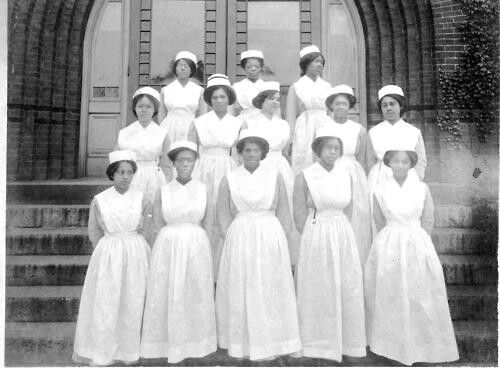






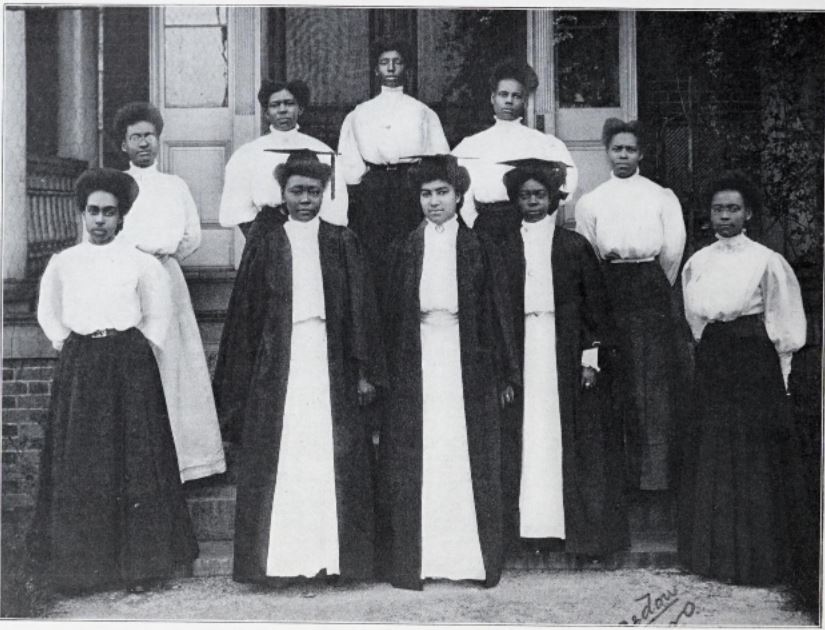
On April 11, 1881, two white teachers from Massachusetts opened a small school for Black women in the basement of Friendship Baptist Church in Atlanta. That school, founded with 11 students and $100, would eventually become Spelman College, the nation’s oldest private historically Black liberal arts college for women.
The founders, Harriet E. Giles and Sophia B. Packard, traveled to Atlanta shortly after the Civil War with a plan to educate newly freed Black women. They found support from the Rev. Frank Quarles at Friendship Baptist Church and opened what was first called the Atlanta Baptist Female Seminary.
Their first class reflected the challenges of the era. Most of the women who enrolled had little or no formal education. Many had been denied the chance to learn to read or write while enslaved. Giles and Packard believed education could create opportunities that had long been denied to Black women.
The two women imagined a school that would go beyond basic literacy. From the beginning, they planned to teach subjects including algebra, chemistry, Latin, philosophy and political economy. By the end of the first term, enrollment had grown from 11 students to 80.

The school survived through donations from Black Atlantans, northern Baptist organizations and volunteer teachers. In 1882, Giles and Packard traveled north to raise money and met businessman John D. Rockefeller. He was impressed by their vision and later helped pay off the school’s debts. His wife, Laura Spelman Rockefeller, and her family, longtime abolitionists, also supported the institution.
In 1884, the school was renamed Spelman Seminary in honor of the Spelman family. By 1901, it had awarded its first college degrees. In 1924, the institution officially became Spelman College.
Over the next century, Spelman grew into one of the country’s most influential historically Black colleges and universities. Its graduates include writer Alice Walker, political leader Stacey Abrams and activist Marian Wright Edelman.
“I led organizations and I spoke at the March on Washington, and all of those things began when I was sitting where you are,” Abrams told Spelman students back in 2024. “I’m here to tell you how extraordinary you already are and how remarkable you will become, because I’ve been where you are. I’ve seen where you are going, and I can’t wait for you to get there.”