



On Aug. 8, 1934, Julian Carey Dixon was born in Washington, D.C. He would go on to represent California in public office for nearly three decades, serving first in the state Assembly and later in the U.S. House of Representatives.
Dixon attended Dorsey High School in Los Angeles before serving in the U.S. Army from 1957 to 1960. After completing his military service, he enrolled at California State University, Los Angeles, where he graduated in 1962. He later earned a law degree from Southwestern University School of Law.
His political career began in 1972, when voters elected him to the California State Assembly. Dixon served three terms before winning a seat in Congress in 1978. He began representing his Los Angeles-area district in January 1979 and remained in the House until his death.
During his congressional career, Dixon became known for his work on government accountability, transportation and issues affecting urban communities. From 1985 to 1991, he chaired the House Ethics Committee. In that role, he led the committee during its investigation of House Speaker Jim Wright, one of the most closely watched congressional ethics cases of the period.
Dixon also chaired the Rules Committee at the 1984 Democratic National Convention. In 1983, he joined seven other members of Congress in sponsoring a resolution seeking the impeachment of President Ronald Reagan following the U.S. invasion of Grenada.
His influence was also visible across Los Angeles. Dixon helped secure federal funding for the development of the city’s Metro Rail system. The busy 7th Street/Metro Center station in downtown Los Angeles was later renamed in his honor, and a plaque at the station recognizes his role in helping make the transit system possible.
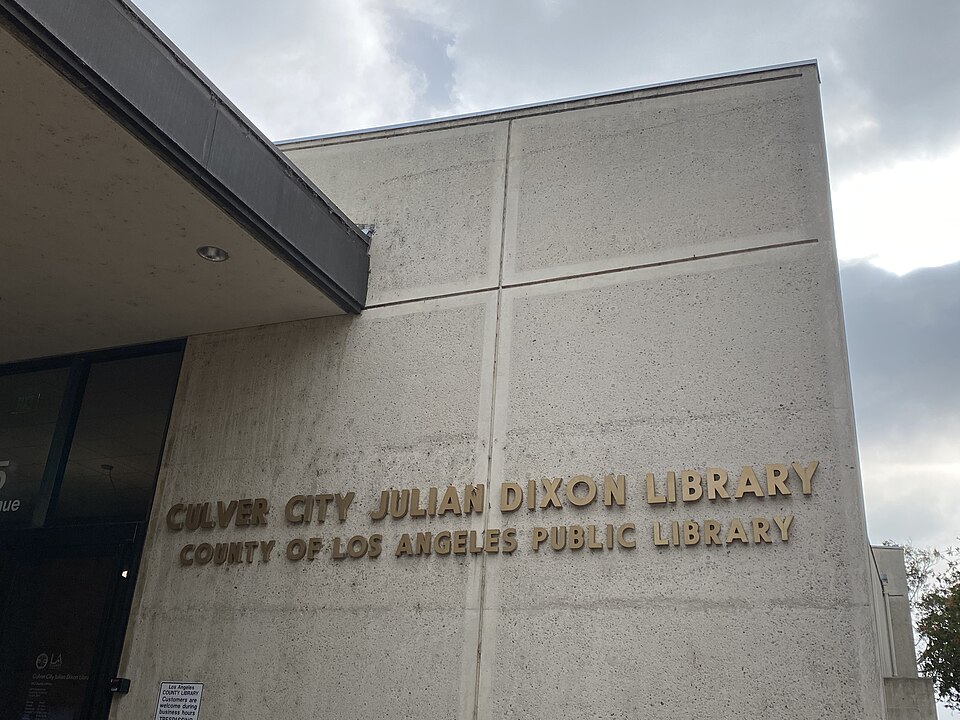
Other institutions also carry his name. Southwestern Law School opened the Julian C. Dixon Courtroom and Advocacy Center in 2004. The Los Angeles County Library branch in Culver City is known as the Culver City Julian Dixon Library.

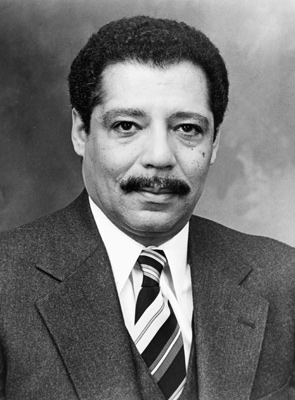
Dixon won reelection to the 107th Congress but died Dec. 8, 2000, at a hospital in Marina del Rey, California, after suffering a heart attack. He was 66.
The House later dedicated a revised edition of “Black Americans in Congress, 1870-2007” to his memory. On March 21, 2001, several former colleagues spoke on the House floor in support of dedicating the congressional volume to him.
Dixon, a member of Alpha Phi Alpha fraternity, was buried at Inglewood Park Cemetery in Inglewood, California.