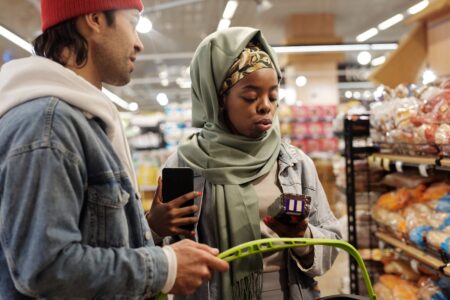





We all have a date, an appointed time. Every soul arrives carrying one unseen appointment and moves through life toward another. In every age that truth has lived quietly in the background, but in this present hour it feels louder, closer, almost leaning over the shoulder of humanity. Wars are no longer distant events buried in tomorrow’s paper; they now unfold before the eyes of millions in real time—cities shaking under bombardment, families running through dust, prayers rising from broken neighborhoods, grief transmitted live across phones and television screens before a person has even finished breakfast. The world feels unsettled, as if history itself is breathing heavily. That atmosphere has made many people think more seriously about endings, about fragility, and about what remains meaningful when headlines become too heavy to carry. In moments like these, people often reach instinctively for what has survived other storms before this one—old habits, inherited rituals, foods tied to memory, things small enough to fit inside the hand yet old enough to have crossed empires and still arrive with meaning intact.
Among those quiet inheritances is the date.
It is striking that one of the oldest cultivated fruits known to humanity continues to move so naturally through modern life. Archaeologists have traced date cultivation back thousands of years through Iraq, Egypt, and the Arabian Peninsula, where palm groves stood not merely as agriculture but as survival itself. Entire desert societies learned that where a palm tree stood, life could organize itself nearby—shade, nourishment, rope, baskets, syrup, shelter, medicine, and trade all radiated outward from one tree. The old Arab saying that the palm lives with its feet in water and its head in fire remains one of the clearest descriptions of resilience ever attached to a plant. This small fruit has once again just completed one of its most intimate annual appearances in human ritual, with Ramadan concluding its thirty-day visit among Muslims worldwide. This year carried unusual tenderness because Ramadan and Lent arrived within the same sacred season, unfolding at once across different corners of the Abrahamic world. Lent, the Christian season of fasting, prayer, restraint, and repentance observed for roughly forty days before Easter, asks believers—especially within Catholic, Orthodox and many Protestant traditions—to reduce appetite, surrender comforts, and enter reflection in remembrance of sacrifice and spiritual renewal. That these two sacred disciplines occupied the same stretch of days created a rare rhythm: millions of Muslims and millions of Christians denying appetite under the same unsettled sky, while the world beyond them remained loud with conflict. It was difficult not to notice how fitting that felt. In a moment when human beings across many lands are praying through uncertainty, two great branches of the Abrahamic tradition happened to be fasting at once, their prayer warriors hungry together, their devotions rising together, even if by different liturgies.
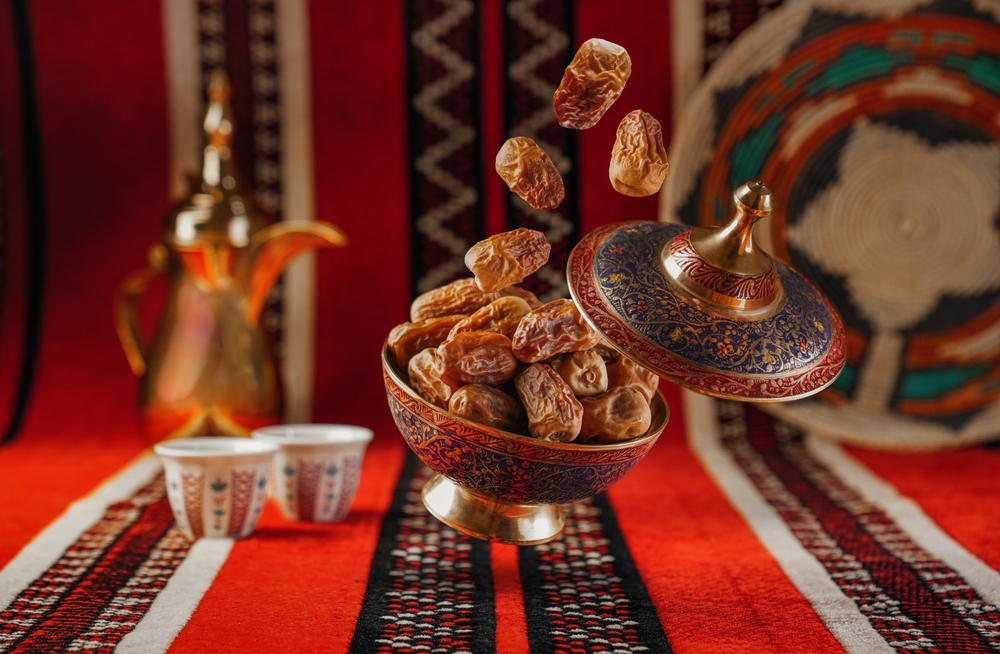
Every evening, for Muslims, the return from hunger often begins with the same fruit that has crossed centuries unchanged. The date does not simply break a fast; it arrives almost ceremonially, as if sweetness itself has been instructed to enter gently after hardship. The first touch of it on the tongue after a day of thirst carries a softness that feels larger than nutrition. In homes across Africa, the Middle East, Asia, Europe and the Americas, one hears the same small sounds repeated at sunset: fingers separating flesh, a seed loosened from its chamber, water poured nearby, quiet invocation before the first bite. In many West African homes, including those shaped by Muslim memory in places like Senegal, The Gambia and Mauritania, dates often sit beside warm milk, porridge, or soup, not merely as food but as a first gentle crossing back into nourishment after restraint. For me, breaking fast with dates is a subtle and sweet reminder of the ease that comes at the end of struggle and challenge. Each evening in Ramadan, that first softness on the tongue feels almost instructional—as if the body itself is being taught that difficulty does not always end in bitterness. It is also an inspiring reminder, for those of us who believe in an afterlife, that after every test there remains the hope and prayer that our own ending will also be sweet—that after the difficult passages of earthly time, after disappointments, losses and private burdens, there will be mercy in what comes next.
This custom carries prophetic roots through Prophet Muhammad, who is authentically reported to have broken his fast with fresh dates when available, and dried dates when fresh ones were not. Classical scholars often note that this reflected not only availability, but gentleness on an emptied stomach and immediate restoration of energy without burden. That distinction matters because fresh and dried dates are often treated as if they are the same experience, though they are not. Fresh dates are living fruit in a softer, more hydrated state. Their flesh is lighter, sometimes almost translucent near the skin, with a delicate sweetness that arrives gradually. Depending on the stage, some fresh dates still carry slight crispness, especially when yellow or reddish before full ripening. At that stage, often eaten in parts of the Arab world, they can taste almost like sugarcane meeting a mild apple, with a faint dryness before sweetness opens. Dried dates are more concentrated, darker, denser and richer because water has receded and sugars have gathered inward. Their sweetness deepens into something almost caramel-like, and their texture can range from soft and yielding to firm and chewy depending on variety. A fresh date tastes like a fruit still breathing. A dried date tastes like sunlight stored. Even the language around dates invites reflection. Every human being has a date attached to life, but not every human beginning is sweet. Some enter this world through hardship, displacement, illness, uncertainty, or inherited struggle. Yet the fruit of the palm carries sweetness as its essential identity. Without sweetness, it loses the very quality by which people recognize and cherish it. Sweetness is the hallmark of the date, just as sweetness and stickiness are hallmarks of honey, richness the hallmark of ripe figs, brightness the hallmark of citrus and depth the hallmark of well-pressed olive oil.
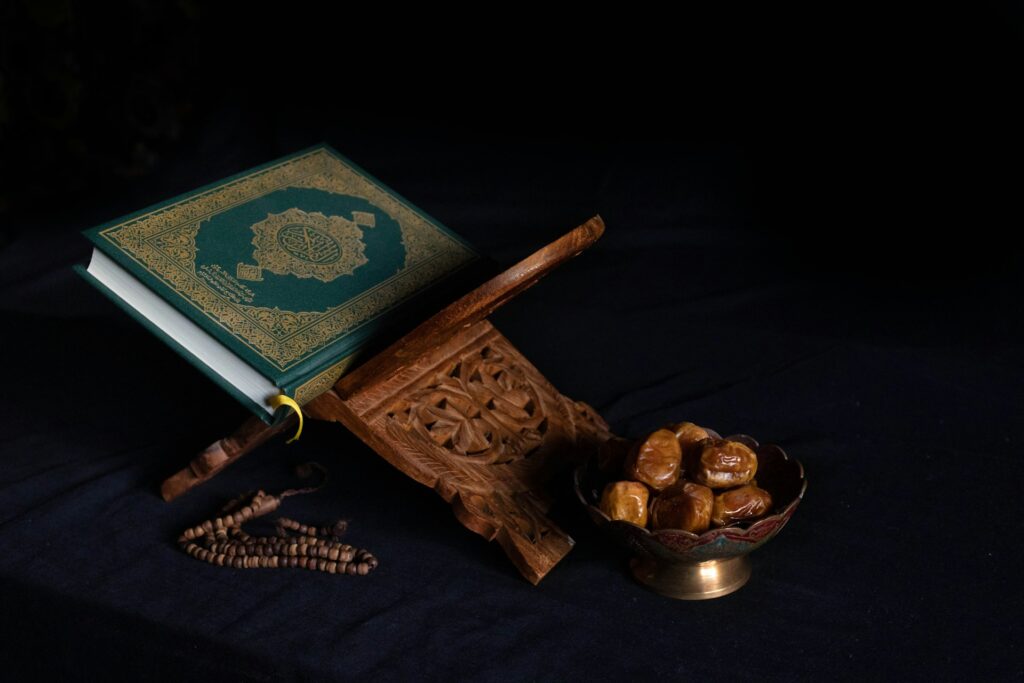
The date palm, Date Palm, survives where harsher climates defeat lesser growth. It stores heat, patience, and desert light around a single narrow seed, and that seed carries a remarkable devotional history. Before manufactured prayer beads became widespread across Muslim lands, many early Muslims counted remembrance—zikr, the repeated phrases of glorification such as SubhanAllah, Alhamdulillah, Allahu Akbar and La ilaha illa Allah—using what was immediately available: fingers, pebbles, knots, and date pits. Historical narrations preserved by scholars including Abu Dawud mention early companions using date seeds and small stones in devotional counting. Reports connected to Safiyyah bint Huyayyand other early worshippers describe piles of date pits arranged before them while counting remembrance. Long before polished misbahah beads became common, the remains of nourishment became tools of worship. The fruit was eaten, but the seed remained active in remembrance, creating a continuity that carries its own beauty: sweetness enters the body, and what remains helps discipline the tongue toward praise. Among date varieties, few hold as much spiritual affection as Ajwa. Ajwa dates, dark, soft and modest in size, are deeply associated with Medina and carry special significance because of an authentic prophetic narration stating that whoever eats seven Ajwa dates in the morning will not be harmed that day by poison or sorcery. For many believers, this has made Ajwa more than a fruit—it is consumed with spiritual intention, trust and prophetic remembrance. Scholars often explain that its spiritual benefit lies not only in the fruit itself but also in obedience, trust, and continuity with prophetic guidance—the unseen dimensions of protection joined with the physical.

Clinically, dates continue to impress modern science. Dr. Frank Hu has emphasized that naturally fiber-bound sugars behave differently in the body than refined sugars because absorption is slower and metabolic stress is lower when nutrients travel together in whole form. Studies associated with the National Institutes of Health show dates contain potassium, magnesium, copper, manganese and soluble fiber while also delivering polyphenols that support antioxidant defense, digestive balance, and steady replenishment after fasting. Some studies have also shown that date consumption late in pregnancy may support smoother labor by encouraging cervical readiness. Among suppliers, varieties tell different stories. Medjool is large, luxurious, almost buttery in texture, historically linked to Morocco before becoming heavily cultivated in California. Deglet Noor is lighter, firmer, with a cleaner honey-like sweetness, historically associated with Algeria and Tunisia. A supplier from Medina once described Ajwa harvest simply: “The tree teaches patience because sweetness cannot be hurried,” and it is difficult to improve on a sentence like that, because farming itself often sounds most truthful when spoken simply. Even in America, where many people still associate date farming almost entirely with North Africa or the Arabian world, the fruit has found remarkable stewardship in Black hands. Sam Cobb Farms is owned by Sam Cobb, one of the few African American date farmers in the United States. From the California desert he cultivates Medjool, Barhi, Safawi and a distinctive proprietary variety called Black Gold.
Fresh raw dates, especially those eaten before drying, remain common in places where palms grow locally. Their taste surprises those unfamiliar with them. They are less sugary at first bite, often carrying a grassy brightness before sweetness arrives, their moisture content higher and their sugars less concentrated. Some people prefer them precisely because they taste unfinished, like fruit caught between youth and maturity. There are also simple ways dates continue serving health beyond fasting: a date paste blended with cinnamon for porridge, dates stuffed with walnuts and tahini, blended dates with black seed and honey, chopped dates folded into lentils or couscous and warm milk simmered with dates, saffron and cardamom. Perhaps that is why the date has survived every age. It has crossed caravans, prophets’ tables, refugee kitchens, monastery shelves, market stalls and modern supermarkets without losing meaning. A single date can enter the body as nourishment, enter memory as ritual, enter worship as symbolism, and enter history as survival.
While the world trembles, some sweetness still remains—quiet enough to fit in the hand, old enough to outlive empires, and faithful enough to remind human beings that even in difficult times, what is ancient is not always distant and what is small may still carry enough sweetness to steady the heart.