




“It proves that if we aren’t the ones running the platforms, our narratives are always on borrowed time.”
– Karen Hunter, media mogul and cultural architect
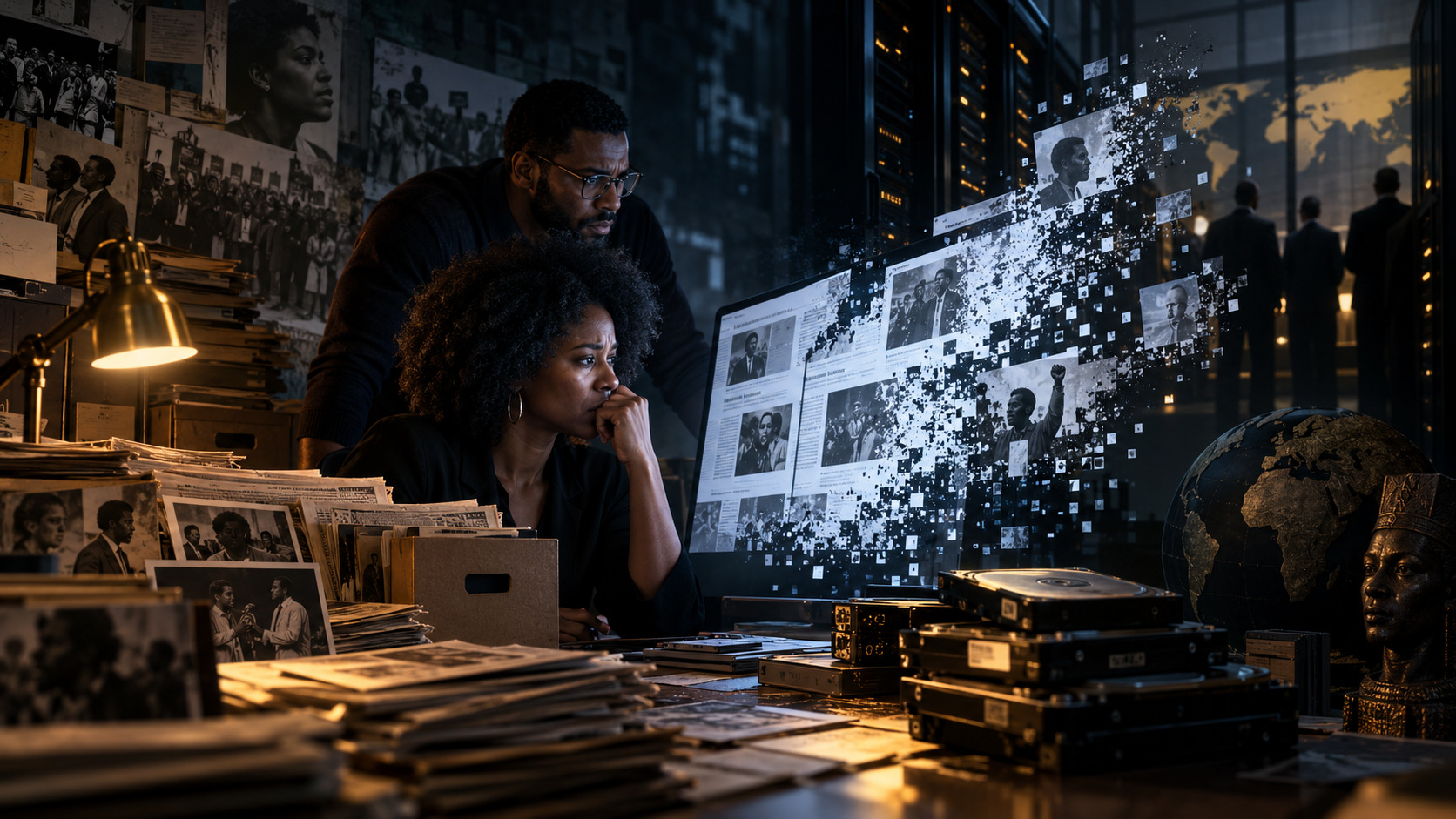
Imagine waking up to find 20 years of our history scrubbed from the internet with the click of a button.
That’s exactly what just happened.
In a quiet, ruthless corporate move, Paramount Skydance wiped BET Digital’s entire written archive, obliterating decades of Black journalism, cultural critique and political reporting overnight.
No warning memo, no transition period. Not even a basic courtesy text. They just hit the ‘delete’ button and called it a “video-first pivot.”
But let’s call it what it really is.
Digital gentrification.
Multimedia reports are still available on the website and BET’s social media. But the decision to delete the written content happened suddenly, leaving many writers with no record of their work.
This wasn’t just some random website update. It intentionally robbed Black writers of their livelihoods and perfectly mirrors the political war on Black stories right now. When white-owned media conglomerates can treat our collective memory like a disposable line item, it proves a terrifying truth – our triumphs aren’t worth the cost of server space.
If you get a sense of déjà vu looking at BET’s website these days, it’s because we watched Paramount pull this exact stunt just two years ago with MTV News. In June 2024, they wiped over two decades of pop culture history from the internet just to dodge the bill for web servers and basic digital maintenance.
@bygeorgiafort I can’t stop thinking about BET deleting its archives and what that erasure says about Paramount’s value of Black stories. JET’s archive was sold for $30 million and preserved. BET’s archive was deleted. Those are two very different choices about the value of Black history. So I have questions. Because what stories are preserved shapes how history is remembered.
♬ original sound – Georgia Fort
Throwing Away the Blueprint
Still, the irony here is sickening. Media conglomerates love “Culture Mining” – exploiting the unique context and nuances of Black talent, Black aesthetics and Black likenesses – because they know it drives millions of viral video clicks on platforms like YouTube. But when it comes to paying the structural costs of keeping searchable, intellectual, written archives? Suddenly, the pockets are empty. They want the viral profit of our flavor, but they refuse to invest in the permanence of our thoughts, our reporting and our analyses.
And that’s not all.
A recent essay published by the Emerald Book News Report argues that by nuking BET’s written articles, Paramount is forcing Black media onto “rented land.” The writer explains that funneling everything into external tech spaces means that BET has completely surrendered their cultural freedom to Silicon Valley algorithms. They say that it also means that the website will be forced to let outside platforms control what gets seen, what gets shared and what gets shadowbanned. It’s a dangerous prospect that swaps self-owned reporting for whatever the current algorithm feels like feeding the timeline.
The Timing Couldn’t be Worse
This digital wipeout is going down at the absolute worst political moment. From the systemic rollbacks of DEI initiatives to the frantic, state-by-state attempts to ban books and sanitize Black education in schools, our stories are being targeted when we can least afford it; and we already know we can’t rely on mainstream outlets to preserve our stories because they barely employ us.
A study by the Pew Research Center found that Black journalists make up only 6% of the U.S. newsroom workforce, despite Black people making up roughly 14% of the population.
Look no further than Paramount’s other massive property, CBS News, to see exactly how The 6% Problem played out in real time. During their recent rounds of corporate restructuring, CBS axed its entire Race & Culture Unit and reports quickly surfaced from Black producers revealing that while their white colleagues were safely reassigned within the network, the producers of color were flat-out handed pink slips. When major networks treat Black journalists as disposable DEI checkboxes rather than essential voices, that tiny 6% sliver of the workforce gets squeezed even smaller while Black cultural milestones and social movements get ignored, flattened or completely mischaracterized. The Black press – and digital spaces like BET.com – were built precisely to correct this exact bias.
They were meant to be the definitive, unfiltered receipts of our lives.

Reclaiming Our Digital Sovereignty
If there is any silver lining to this entire mess, it’s that the internet has a memory that billionaires can’t easily buy out. While Paramount failed us, independent archivers at the Internet Archive stepped up to do the work that corporate leadership refused to fund. Thanks to them, over 199,000 deleted BET articles have been preserved.
You can actually go back and read them right now using the Wayback Machine or browse them directly through their dedicated Wayback Labs BET explorer portal.
It’s a massive win for cultural preservation, but we shouldn’t have to rely on a non-profit digital library to play superhero every time a corporate conglomerate decides to clear out its hard drives.
The ultimate lesson here is loud and clear: we cannot leave our history in the hands of people who do not care about our legacy. Relying on white-owned media conglomerates to host our cultural records is like renting an apartment and expecting the landlord to preserve your family photos when you move out – it’s just not going to happen.
If we want true cultural freedom, we have to own more of the digital land we build on. For Black writers, creators and independent platforms, that means moving away from corporate-walled gardens and leaning into self-hosting.
Creating your own websites, owning your servers, controlling your data and relentlessly backing up your work are essential steps in this process. It’s not just about personal ownership; it’s about building a robust network of independent, Black-owned media platforms that we fund, protect and nurture so nobody can hit the delete button on our legacy.