





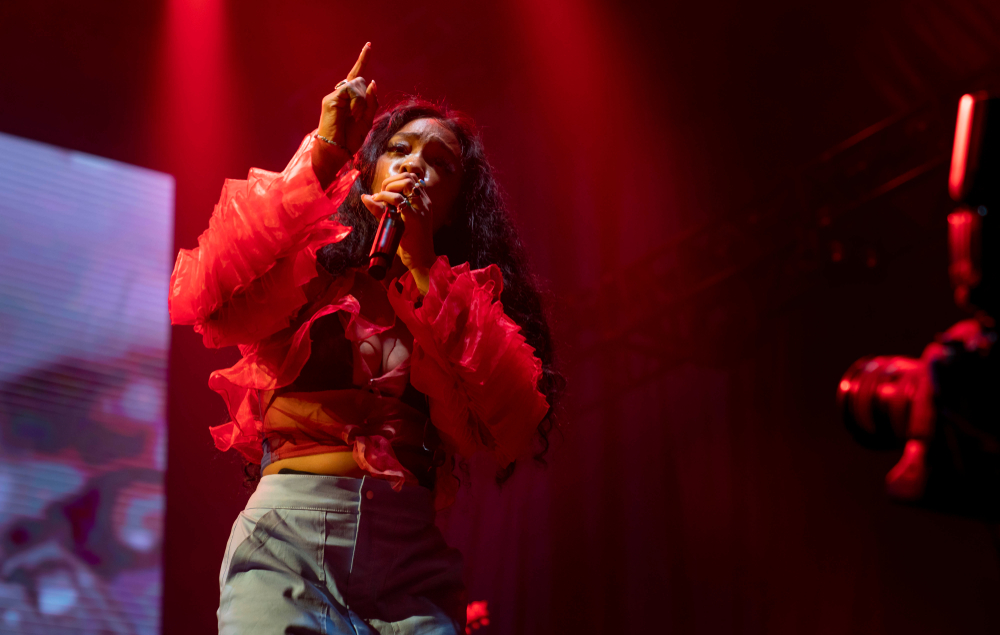
Grammy Award-winning musician SZA publicly called out AI music generators and artists involved with them in an Instagram story posted on Saturday.
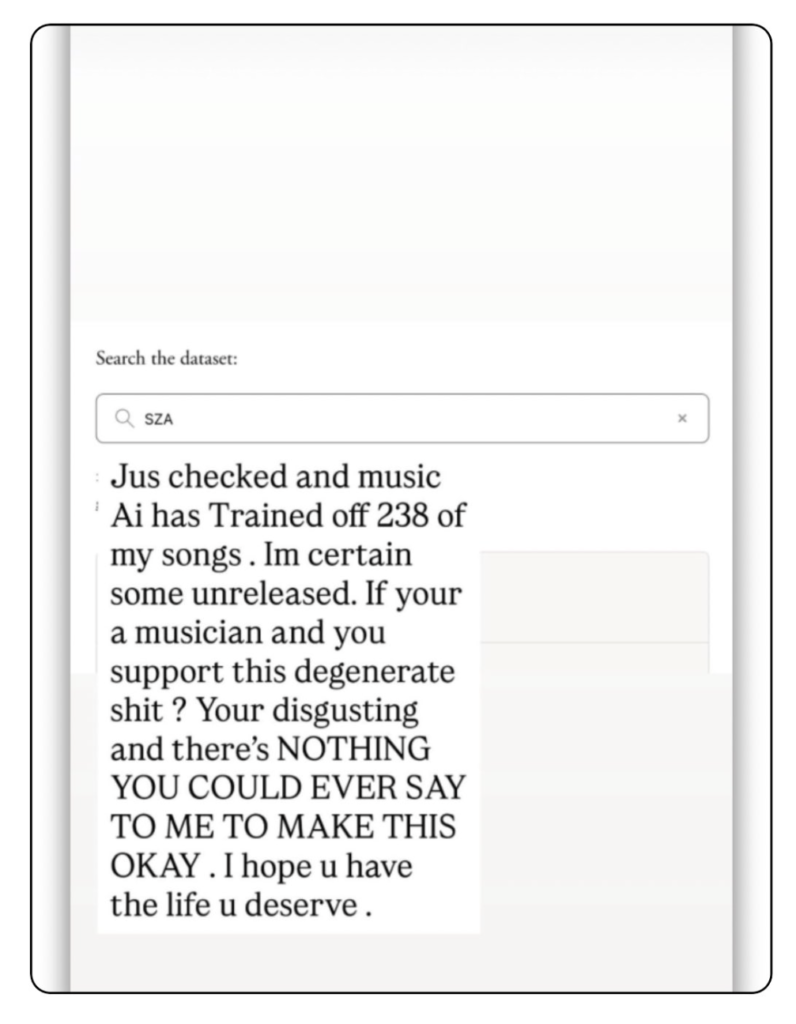
In the social media post, the artist voiced her frustration with AI-generated music processes, highlighting that a search for her name showed that 238 of her songs were used to train AI models. The Atlantic recently posted an open database where the names and titles of artists and songs can be entered to see if they were used to train AI.
These AI models include Suno, one of the more popular AI models for music, and Udio. The newest tool created by independent researcher Alex Reisner encompasses the catalog of major artists, including Beyoncé and Bad Bunny, as well as smaller, independent artists.
According to SZA, the songs highlighted by the tool were unreleased tracks sent to Suno and Udio by someone.
In her post, SZA also claimed that artist Diplo had equity in Suno, a company training their systems on the “best and brightest Black minds of writers and producers.”
“We make up 13% of the American population yet influence the world w our sound and perspective,” said SZA in a post. ”I AINT HEARD A WHITE AI SONG YET…We have no protection in legislature medical or creative. The easiest to steal from. DO NOT GIVE AWAY YOUR VIBRANIUM !!! DO NOT TRAIN AI W YOUR GENIUS.”
Several other artists have echoed anti-AI sentiments. In an open letter released in 2024, over 200 artists, including Stevie Wonder, Smokey Robinson, Jon Batiste, Norah Jones and the estate of Bob Marley, joined in on a call to “cease the use” of artificial intelligence in the music industry.
A year later, in 2025, over 1,000 musicians, including Billy Ocean, Kate Bush and Annie Lennox, developed a silent album made of empty studios and performance spaces, protesting the development of a UK AI law. The law authorized AI models to use creators’ work to develop models, unless the rights holder explicitly opts out.

Since then, however, AI in music has continued to spread, with several AI-created musicians charting on the Billboard charts.
Last November, at least six AI musicians debuted on the Billboard charts. Gospel AI-musician Xania Monet became the first AI-artist to receive regular rotation, allowing them to receive a place on five different Billboard charts. Monet was then signed with the label Hallwood Media as part of a multi-million-dollar deal.
According to SZA, her mission is to battle an industry that wants to remove a person’s perspective from music.
“I’m not up against the pop girls, I’m not up against the R&B girls. I’m up against anti-intellectualism and doing things easy,” said SZA per Variety. “The type of blend of information my human experience provides, AI can’t even be prompted to f**k with. I want to just let this angst drive me into bizarre directions.”