

Article by media partner Cuisine Noir, the country’s first Black culinary lifestyle outlet since 2009 dedicated to connecting the African diaspora through food, drink and travel.
Over the years, Cuisine Noir has covered the journey of Kara Still and Carmen Dianne, co-founders of Prosperity Market, and their mission to make healthy food accessibility easier within communities. In 2021, the duo launched their all-Black farmers market in response to the COVID-19 pandemic after seeing a lack of grocery options and fresh produce in neighborhoods.
Since launching Prosperity Market, Still and Dianne have conducted farmers market pop-ups throughout Los Angeles, increasing the markets’ recognition and fulfilling a need across communities. Their success has transformed the neighborhoods, recognizing people and businesses that were typically an afterthought when it comes to food security.
Now, they have achieved another major milestone thanks to the support and collaboration of the communities they serve: a mobile food trailer. This achievement highlights and celebrates Black-owned businesses throughout Los Angeles, providing greater visibility and opportunities for these entrepreneurs.
Mobile Food Trailer Transition
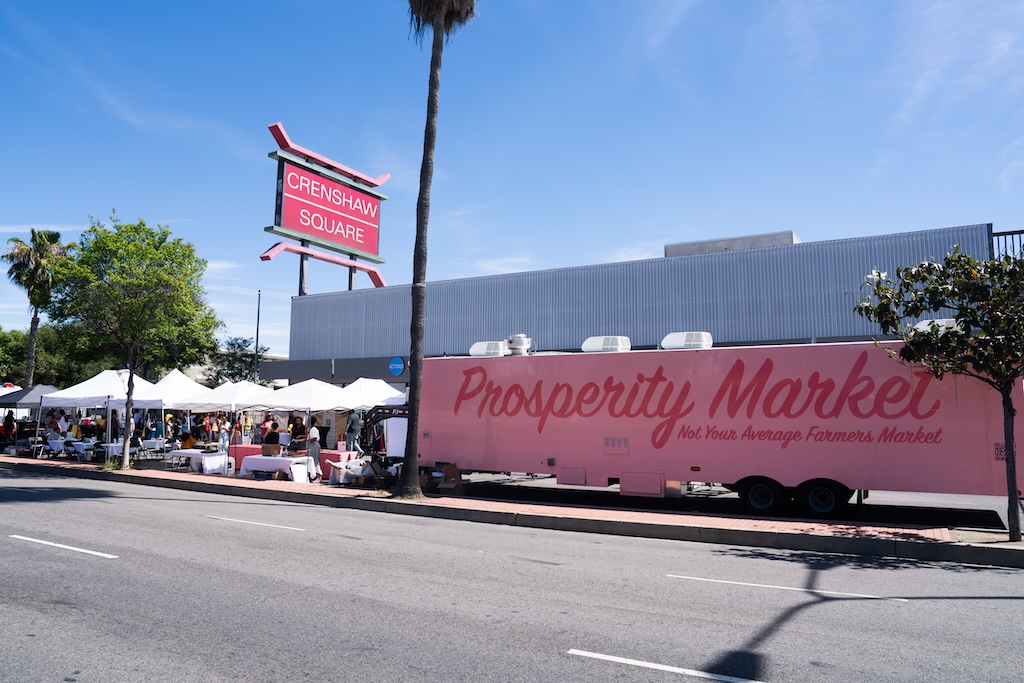
Earlier this year, the duo officially launched their first 48-foot mobile food trailer, made possible with a crowdsourcing effort started in 2022 that raised over $100k. The food trailer is solar-powered and electric, with the front serving as a food truck featuring a rotating roster of Black chefs and food entrepreneurs. In the back, shoppers can find a grocery store stocked with locally grown produce from Black farmers and other items from Black-owned businesses. With the move from pop-ups, Still and Dianne are making some huge changes.
“Our biggest change is that we’re transitioning away from the pop-up model we started with —moving from changing locations with a tent and table—and focusing instead on our mobile trailer, which is our farmers market on wheels,” Dianne says.
“That’s where we’re putting our energy now, and we want people to get used to shopping with us that way. We’re building a regular trailer route throughout Los Angeles, helping people understand what the mobile market is and know they can always shop with us online as well.”
Still chimes in and says, “That’s always been the goal from the beginning, which is part of why we never held our pop-ups in the same place all the time. While we were figuring out how to build and create a true mobile market vehicle, we wanted people to understand early on that you weren’t always going to find us in one fixed location.”
They say this approach has helped them build invaluable relationships and community throughout Los Angeles, but the core of their mission and work remains the same. “We’re still mobile. We’re still going from place to place. The vehicle just looks different now,” says Still.
The duo has built a strong following through the years and appeared on “Good Morning America” in February 2023. Their interview caught the eye of rapper, record producer, record executive, and Los Angeles native, Dr. Dre, who generously donated funding for two more mobile food trailers for Prosperity Market.
By Stephanie Teasley