




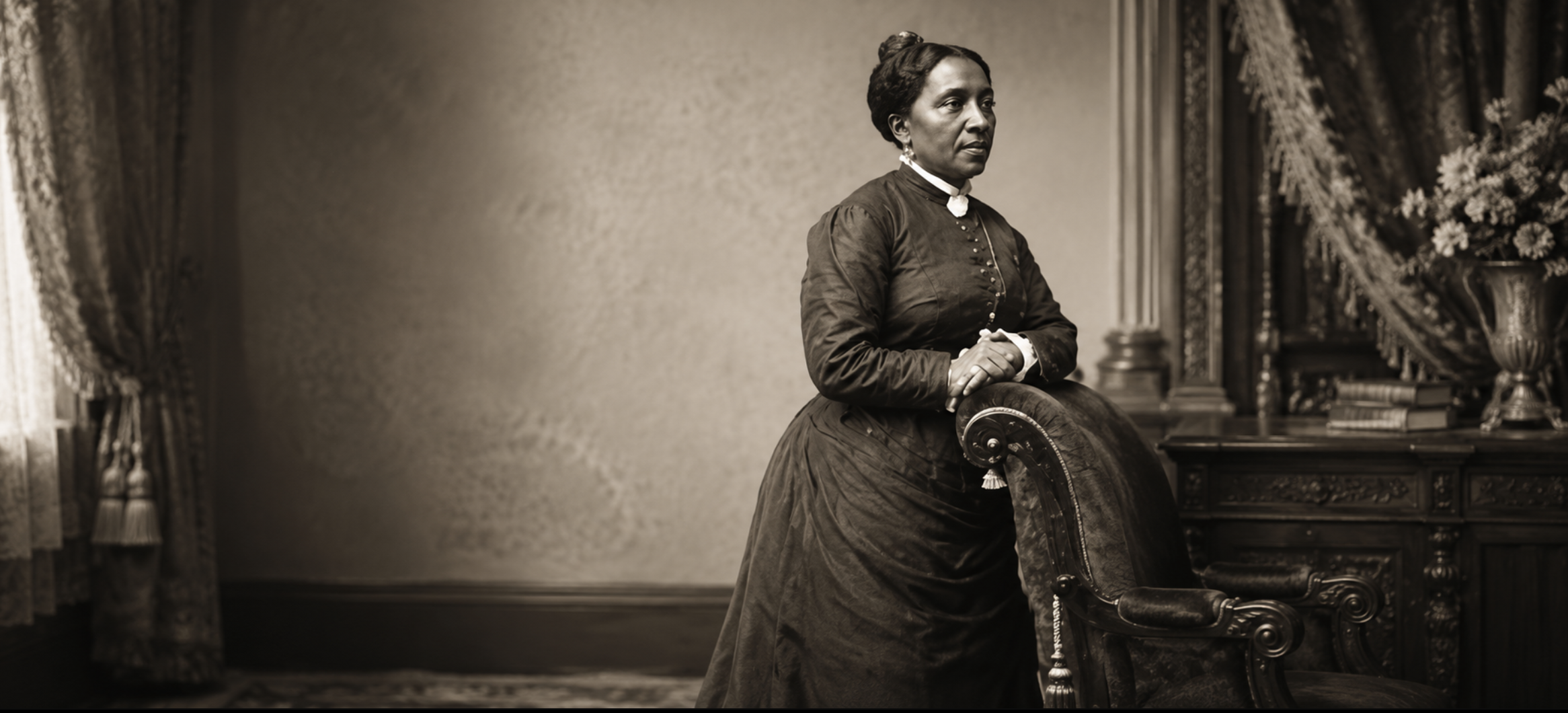
On this day 172 years ago, schoolteacher Elizabeth Jennings Graham successfully began her campaign to desegregate the New York transit system.
Graham was born in 1827 to Elizabeth and Thomas Jennings. Both her parents were highly revered in their communities. While Thomas became one of the first Black Americans to hold a patent in the country and was a well-known abolitionist, Elizabeth was a writer and founding member of the Ladies Literary Society of New York, where she worked to help Black women further their learning and improve their lifestyle. The group also led community efforts to help enslaved people and poorer community members.
From a young age, Graham was outspoken about education and freedom, delivering speeches such as “On the Improvement of the Mind” for the Ladies Literary Society of New York. By the age of 27, she became a schoolteacher at the African Free School, an educational institute for both enslaved and free children.
On July 16, 1854, seven years before the onset of the Civil War, Graham boarded a streetcar. Once she boarded alongside her friend Sarah Adams, both women were ordered to get off the streetcar because they did not accept Black passengers.
In response, Graham resisted, leaving only when she was forcibly removed by the police. After the experience, she drafted a letter, sharing her encounter with members at her family’s church. The members, along with Thomas, banded together to get her story told.
Publications such as the “Frederick Douglass’ Paper” and “The New York Daily Tribune” picked up the story. By focusing on her experience and her connections within education and New York communities, Graham successfully launched an organized movement to end racial discrimination on streetcars.
She filed a lawsuit against the Third Avenue Railroad Company, the conductor, and the streetcar driver with the help of her father, Thomas Jennings, a prominent businessman and abolitionist. The family hired Chester A. Arthur, a 24-year-old lawyer, to represent the case. He went on to become the 21st President of the United States. The group won the case as the judge ruled that everyone has “the same rights as others and could neither be excluded by any rules of the company, nor by force or violence.”
In her case, Graham was awarded $250 in damages, and the Third Avenue Railroad Company desegregated its cars after the ruling. The entire transit system would be integrated five years after the Jennings v. Third Ave. Railroad case.
The lawsuit provided greater attention to the transit system and led to multiple other cases against the rail lines. Immediate integration, however, was not possible due to the private ownership of the streetcar companies.
Graham’s case also provided the basis for the foundation of the Legal Rights Association. Created in 1855, the Legal Rights Association was an organization formed by Thomas and other Black leaders. Considered one of the earliest examples of a civil rights organization, the group served as an inspiration for the NAACP and the National Equal Rights League.
Created to address ongoing discrimination in the system, the Legal Rights Association advocated for equal rights through public-opinion campaigns, civil disobedience, community efforts, and a legal defense fund, pioneering practices adopted by civil rights groups.
In addition to helping integrate the transit system in New York City, Graham is notable for founding the first kindergarten for Black children in the state. On Park Row, the city officially renamed a block on Park Row “Elizabeth Jennings Place” to commemorate her role in the education system.
For her role in shaping Black activism in New York City, Graham has been honored through New York City’s “Lizzie’s Day.”
Held last year, the day commemorates her push for justice on Feb. 22.