




According to a top-tier fashion glossy, we can apparently rename an afro a “cloud bob” now.
Because, why recognize the history, deep cultural significance and actual name of a hairstyle when you can just make up something “quirky” for clicks instead, right?
Yeah, this really just happened. And it wasn’t just annoying – it was downright offensive.
If you’ve been treating yourself to a much-needed mental break from doomscrolling and happened to miss this story, here’s what went down.
American Vogue recently ignited a firestorm by rebranding the classic afro hairstyle as a “cloud bob.”
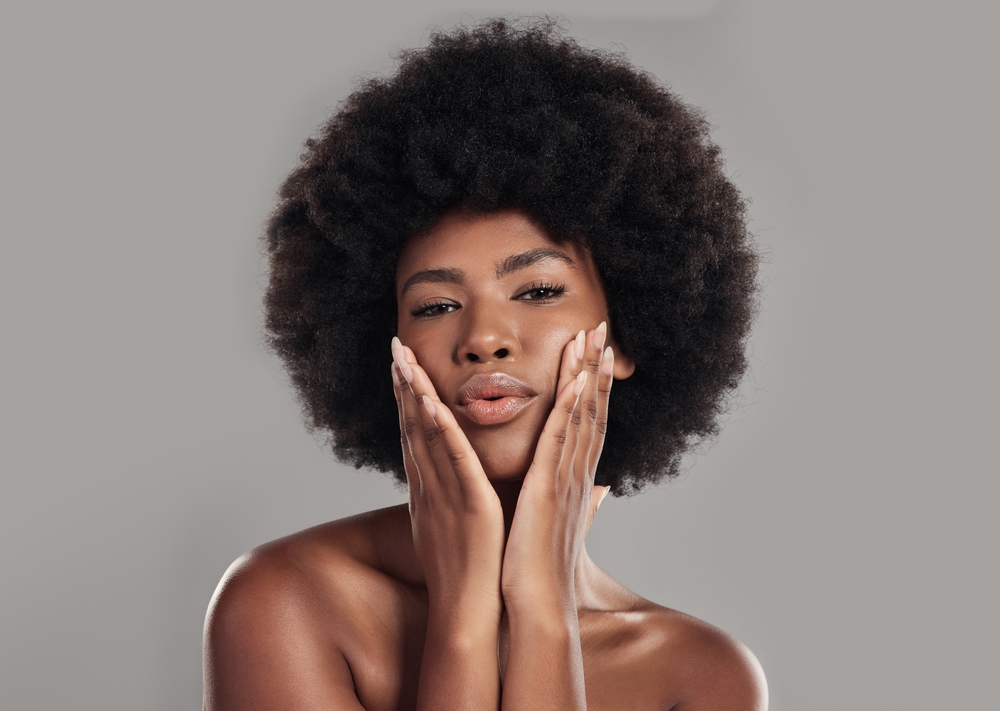
This move, hidden within a polished beauty feature focused on thick hair, used an image of beauty entrepreneur and actor Tracee Ellis Ross rocking the iconic hairstyle, as she often does.
Vogue even credited celebrity hairstylist Tom Smith for defining the look in the article.
Well, in true “Black Bloggersphere” fashion (huge nod to luminary Bevy Smith for giving us this linguistic gem), The Culture was not having it.
The backlash was swift and fierce, as social media platforms erupted with criticism and course-correction. Users on Instagram, TikTok and X rallied together to call out the cultural appropriation inherent in Vogue’s mislabeling.
“This is not a ‘cloud bob.” We are not referring to it as a ‘cloud bob,’ ” RaeShanda Lias-Lockhart, a popular Kentucky-based content creator, businesswoman and LGBTQ+ advocate, explained in a video posted on Instagram last week. “It’s 2026 and we are going to stop Christopher Columbus-ing Black people’s hairstyles. This is Tracee Ellis Ross and this is an afro.”
Folks quickly co-signed Ms. Lias-Lockhart’s sentiments in the comments.
“What in the colonization is a cloud bob?” someone wrote.
“Will all the afros please stand up.” another IG user said in a separate post. “Are we allowed to have nothing that remains true to us, true to what naturally is art? The gentrification of Black hair is REAL – and it’s giving rename, repackage, reclaim.”
Apparently, Mr. Smith wasn’t tolerating the stunt either. Last week, he took to Instagram and distanced himself from the term, and Vogue, in a statement, which reads, in part, “I was not asked to contribute to this article, did not provide a quote for it and was not briefed on the topic.”
Mr. Smith continued.
“I did not provide or approve the image used,” he wrote. “Once I became aware of this, my team contacted the publication and the section was removed.”
Vogue quietly updated the article and took away the segment featuring the hairstyle, along with Ms. Ellis Ross’s image.
To date, it has not issued a public statement or apology regarding the misdescription or the controversy.
Ms. Ellis Ross has yet to make a formal public comment regarding her mention in the article as well. However, in the wake of the public outcry, she shared a post that showcases her sporting various afro hairstyles, accompanied by a definition of the afro as “a hairstyle of tight curls in a full evenly rounded shape.”
Vogue’s reckless decision to slap a whimsical label on the afro for the sake of driving engagement was viewed as dishonorable and an attempt to dehumanize its long heritage. And sadly it’s a maneuver that we’ve seen countless times before.
Cloud bob is insane. It’s called an Afro for a reason. pic.twitter.com/LKjnjLUG9h
— Dr. Allison Wiltz (@queenie4rmnola) April 17, 2026
Remember back in 2018 when the so-called “mainstream” beauty outlets renamed our long-beloved silk press hairstyle, as “glass hair”, rebranding it as some groundbreaking, celebrity-driven discovery that was attributed to white celebrities like Kim Kardashian for ultra-shiny, sleek hair? And for those of us who are old enough to remember the purported “Bo Derek Braids” – a beaded cornrowed hairstyle with thousands of years of African history – it, too, was revamped with the name of the white actress who wore them in the 1979 film 10.
I could go on, but I’m sure you get my point.
So, that’s the long and the short of the story.
And now that we’ve all been brought up to speed, if I may take a brief moment to directly address the current situation at hand regarding the publication in question.
@shopaif A Cloud Bob?! #fyp #hair #history #hilarious #greenscreen ♬ original sound – RaeShanda Lias
Dear Vogue,
Your decision to remove the “Cloud Bob” feature was a step in the right direction, but it’s important to recognize that the real challenge lies in grasping the deeper implications of this misstep.
I can only speak for myself, but I believe that the criticism you received was a clarion call of the ongoing struggle against appropriation. This wasn’t simply a “fashion faux pas” nor was it just about mislabeling a hairstyle. This was emblematic of what happens when dominant cultures co-opt the aesthetics of disenfranchised groups without giving them credit: it strips away their significance and erases their history. It also underscores an exploitative power imbalance that enables privileged individuals to profit from the styles of marginalized communities, who have often been mocked, punished and stereotyped for embracing these same styles.
When an important hairstyle like the afro is renamed and sanitized for mainstream appeal, it not only diminishes the struggles and triumphs associated with it, but it also turns it into a commodity devoid of its rich heritage. This not only disrespects its origins but also perpetuates an economic cycle where the original groups remain unrecognized and underserved.
For many of us within the Black community, the afro will always be much more than a haircut. This iconic look is a symbol of shared resilience, identity and it carries a deep history that intertwines with both American and global stories, reflecting a journey of self-acceptance and cultural pride. Your attempt to rename it risked overshadowing the powerful essence and relevance of these narratives, diluting what the afro represents for generations. It’s not merely about the curls or the volume. It’s about honoring our ancestors, celebrating our uniqueness and asserting our place in a world that has often sought to exclude us.
The afro stands tall, much like the people who have donned it in the past and those who proudly wear it today. Changing its name would be to overlook the beauty and depth of what it truly means to us.
In our interconnected, social media-driven universe, one where even the smallest voices can be greatly amplified from time to time, it is more important than ever for institutions like Vogue to continue to approach these matters with sensitivity and awareness because fashion and beauty hold a unique responsibility to celebrate diversity in its authentic forms so everyone feels seen and valued.
Respectfully,
Danielle Bennett