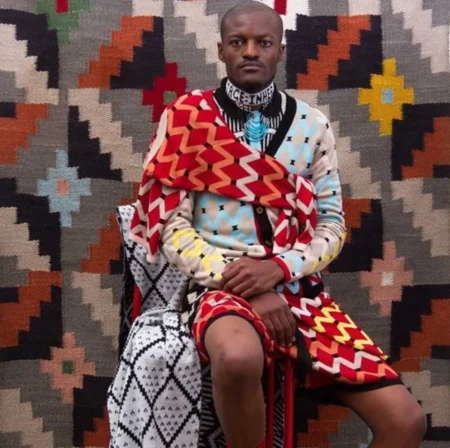







Paris and Milan had better watch their backs.
Because Africa’s style scene is having a massive moment.
It’s pulling in a cool $31 billion each year. Experts say it could even reach $50 billion by 2030.
That is not a typo—the motherland is cashing in big. And it’s proving that heritage craftsmanship and high fashion are a billion-dollar match made in heaven.
It’s no secret that luxury fashion has always turned its gaze toward Africa for inspiration, but the trend has gained major momentum in recent years. For example, Dior unveiled a women’s cruise collection in Marrakech in 2019 and a men’s show against the iconic milieu of the Pyramids of Giza in 2022. Chanel also made headlines by hosting its first-ever runway show in Dakar in 2022. Still, Africa has often been relegated to a mere backdrop for these high-profile events, but that narrative has started to shift dramatically. Designers are not just “borrowing” the continent’s aesthetics; they are beginning to engage more deeply with the rich culture, ingenuity, artistry and craftsmanship that Africa has long offered.
African designers are taking greater leaps into the spotlight, thanks in part to the backing of global titans like Beyoncé, Alicia Keys and Naomi Campbell. This attention continues to pave the way for brands such as Lemlem, founded by Ethiopian model Liya Kebede, which has achieved international recognition, especially after its successful collaborations with H&M and J.Crew. Meanwhile, Zuri, a dynamic Kenyan brand, has opened a store in New York. Ethiopian designer Mastewal Alemu, along with South Africa’s Boys of Soweto and DOPE Store, showcased their stunning collections at Moscow Fashion Week. Other designers like Katchy Kollections and Maki Oh have also gained international acclaim. Plus, many African designers, including Adebayo Oke-Lawal and Thebe Magugu from South Africa, have dressed high-profile celebrities at the Met Gala last year.
Serge Carreira, who leads the emerging brands initiative at the Fédération de la Haute Couture et de la Mode, points out the increasing interest in African talents. He believes that in the next decade, African brands are on track to achieve the same level of recognition and success as independent European brands. He explains that consumers are attracted to the colorful and unique nature of African fashion, which offers a refreshing change from “quiet luxury” trends and other popular mass-market brands.
Another key benefit of the rise of African fashion is its focus on sustainability. Designers often use local traditions, methods and materials to create their collections in their own communities, using resources found nearby. As more people around the world look for sustainable products, this approach gives Africa an important advantage.
Kenyan designer Katungulu Mwendwa has centered her brand, Katush, around sustainability. “We aim to create items that are 100% made on the continent,” she explains to Business Insider, mentioning that even the buttons are hand-carved in Kenya. She gets fabrics from Burkina Faso, Uganda and Tanzania. In Nairobi, Anthony Mulli includes traditional beadwork in his brand Katchy Kollections, while Amaka Osakwe from Lagos uses adire cloth for her Maki Oh brand. David Tlale from South Africa ensures that his brand only uses high-quality African fabrics, with all collections made in Johannesburg.
“Supporting and promoting local designers, artisans, and manufacturers both nationally and globally is a key priority for the Egyptian Fashion and Design Council (EFDC),” Susan Sabet, EFDC Board Member & Secretary General and BOF500 member, explained in a recent interview. She believes that this commitment to sustainability is fostering growth, attracting global attention, and providing more financial opportunities for African brands.
For the first time, Africa’s rising status as one of the world’s most promising fashion centers was prominently featured at the BRICS+ Fashion Summit in Moscow. This inaugural event, held two years ago, spotlighted how emerging markets are stepping into the limelight and becoming a powerful influence in the fashion industry, fully capable of establishing their own standards and trends. With participation from over 100 countries, including around 30 from Africa, these rising fashion economies no longer seemed like isolated entities; rather, they presented a united and formidable force ready to shake things up in the industry and create exciting new opportunities.
This situation is unfolding because the market, which was valued at approximately $31 billion in 2020 according to McKinsey & Company, has the potential to surpass $50 billion by 2030 if investments and infrastructure developments continue at the current pace, Business Insider notes. UNESCO reports that the continent’s annual exports of textiles, apparel and footwear amount to $15.5 billion. Furthermore, demand for premium African brands is expected to increase by 42% by 2033.
However, UNESCO also points out several structural challenges, including limited financing, inadequate infrastructure and a lack of modern training programs. Experts say that in order to overcome these hurdles, continue growing and surpass the $31 billion valuation, the African fashion industry needs to tackle key issues related to funding, resources and education.
Investment Funds and Support: Set up special funds and networks to help fashion micro-businesses because they currently receive much less funding than tech companies.
Financial Partnerships: Collaborate with organizations like the African Development Bank (AfDB) and UNDP to make loans safer and provide initial grants to boost production.
Crowdfunding and Digital Finance: Utilize online platforms made for creatives to raise local funds for everyday operations and inventory.
Trade within Africa: Use the African Continental Free Trade Area (AfCFTA) to make it easier to transport goods across borders, reduce the cost of sourcing fabrics and streamline the movement of raw materials and finished products.
Production Centers: Create centralized locations for manufacturing, garment printing, and storage that have reliable power and modern equipment to lessen reliance on imported textiles.
Logistics Technology: Introduce regional digital logistics solutions to cut down on customs delays and solve supply chain problems.
From Lagos to Paris runways, African style proves that creativity is everywhere, but thankfully, the infrastructure is finally catching up. This isn’t a fleeting moment; it’s a $30 billion movement.
Beat the hurdles, back the talent and watch this $30 billion giant become an unstoppable global force.