





Article by media partner Cuisine Noir, the country’s first Black culinary lifestyle outlet since 2009 dedicated to connecting the African diaspora through food, drink and travel.
The Garifuna people are a diasporic community shaped by resistance and survival. They are a mixture of African and Amerindian descendants, originating from Saint Vincent in the Caribbean, where they traditionally spoke Garifuna, an Arawakan language. They descend from Indigenous Arawak and Kalinago peoples from northern South America and the Eastern Caribbean, as well as Afro-Caribbean groups.
In the late 1700s, after resisting British colonization, the Garifuna people were forcibly relocated from Saint Vincent to Roatán, Honduras, laying the foundation for today’s Central American Garifuna diaspora. Other diaspora communities now exist across Belize, Guatemala, Nicaragua, and the United States.
Today, Garifuna identity endures not only in coastal villages and ancestral homelands but also in cities and other places where communities actively maintain language, food, and traditions through daily practices rather than formal education.
For many in the Garifuna diaspora, cultural community is rooted in proximity; what is heard at home, cooked in kitchens, sung during gatherings, and passed down through observation. The line between inheritance and reinvention is where Jessica Baltazar’s story begins.
Preserving Garifuna Identity
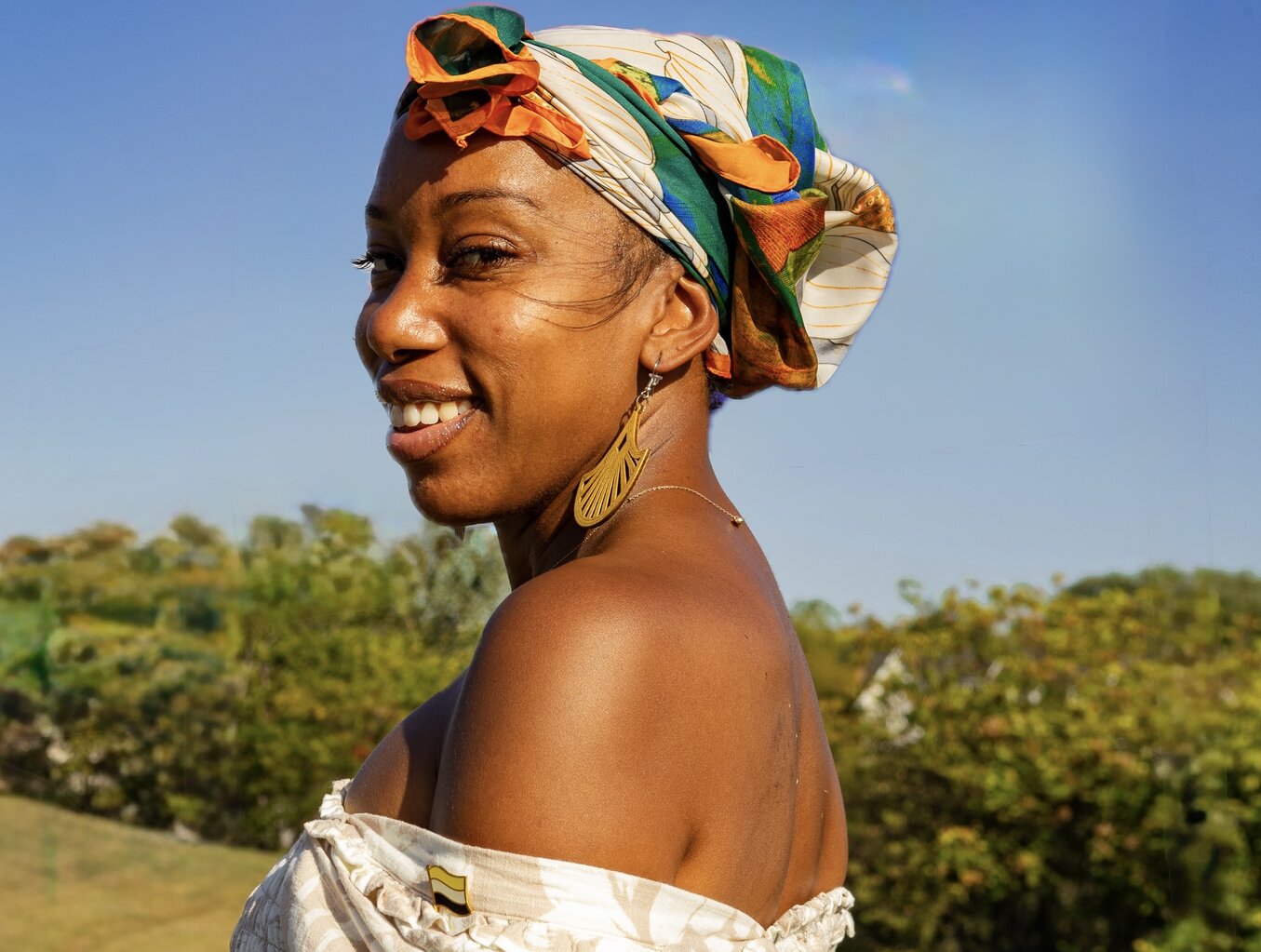
Baltazar was born in Brooklyn, New York, to immigrant parents from Guatemala. “Both of my parents are Garifuna,” she says. “My mother is from Livingston, called Labuga in Garifuna, in the Izabal region of Guatemala. She was raised there by her mother until the age of nine, when her mother passed away, and afterward she was lovingly raised by her aunt. My father was raised in Puerto Barrios until the age of nine and then spent his formative years in Livingston from nine through 18.”
Growing up, Baltazar was surrounded by Garifuna language, music, food, and tradition, though she was never formally taught the language. “When it came to Garifuna, I was always curious,” she says.
“My parents were still learning English themselves, so my siblings and I mostly spoke English at home. We were encouraged, but not forced, to speak Garifuna. So instead, I observed. I watched how they spoke, the tone in their voices, their expressions, their energy. That’s how I learned to understand the language.”
Although she does not speak Garifuna fluently, Baltazar reads it with intermediate fluency and writes it at a basic level. “I learned Garifuna through listening and observation,” she explains. “I understand it well, I read it with confidence, and I’m continuing to grow in writing and speaking.”
Living the Garifuna Identity
She credits her parents with preserving Garifuna culture in their home, the best way they knew how. “Garifuna people know how to speak Spanish because history forced us into it, but Garifuna is our first tongue. My parents used Spanish with others, but their language with each other was always Garifuna in our household and still is.”
Baltazar’s mother cooked Garifuna food every day. “Fried fish, hudutu (mashed green plantains in coconut stew), tamales, frijoles, ereba (cassava bread), pan de coco, pancakes (fried breakfast cakes), and bimecucule (sweet coconut rice). Food was one of my earliest teachers.”
By Stephanie Teasley