


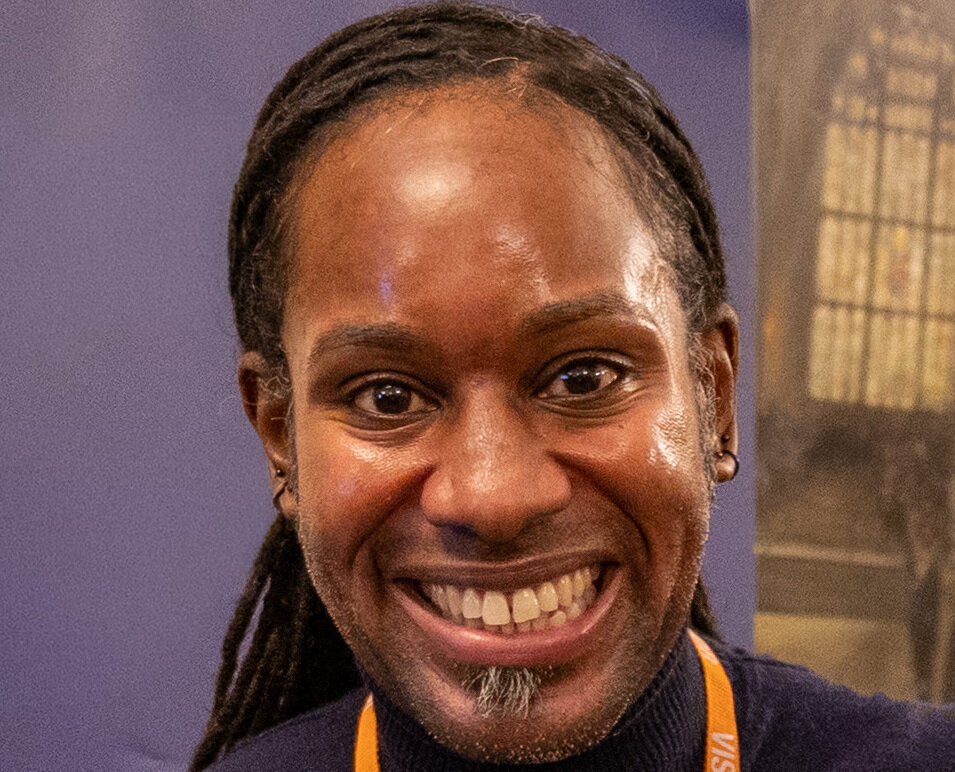
The death of Professor Jason Arday at 41 has stirred grief, anger and questions about how one of Britain’s most visible Black academics was treated in the weeks before he died.
On “The Karen Hunter Show,” Hunter and author and scholar Dr. Daniel Black discussed the intense scrutiny surrounding Arday, who became the youngest Black professor at the University of Cambridge when he was appointed in 2023. Their conversation centered on race, academia and the volume of attention given to allegations about Arday’s academic work.
Hunter argued that the scrutiny grew far beyond the original accusations.
“The media conspired right along with him,” Hunter said while discussing Nathan Cofnas, a former Cambridge researcher whose writings on race have drawn controversy. She cited the number of stories published about Arday and asked why his case yielded so much mainstream attention.
Arday had previously faced plagiarism allegations involving his doctoral thesis. Liverpool John Moores University, which awarded his doctorate, investigated earlier claims and did not uphold them. The university attributed problems it identified to citation errors that could have resulted from honest mistakes. Cambridge announced another investigation in August after additional allegations emerged. Arday denied plagiarism.
Hunter described the dispute as part of a larger problem facing Black scholars working inside elite institutions.
Black said Arday’s experience forced him to revisit beliefs he once held about universities.
“I really thought that academia was the one place in America where the messages of racism would not be so wild,” Black said, recognizing that highly educated environments might operate differently because they were filled with people who read and studied history.
His view eventually changed.
“The same system of America that made prisons and that imprisoned my people also birthed the universities,” Black continued.
Black also questioned the level of effort directed toward examining Arday’s work, telling Hunter, “You were searching for it hard.” Hunter repeatedly returned to a single disputed sentence in a 146,000-word dissertation.
Arday resigned from Cambridge on Aug. 5. Nine days later, he was found dead at his south London home. Metropolitan Police said his death was unexpected but was not being treated as suspicious. His family said he had endured a “campaign of sustained abuse” over several years.
Liverpool John Moores University said it was “immensely saddened” by his death and extended its thoughts to his family, friends, colleagues and students.
The Guardian before and after. The audacity. pic.twitter.com/YS8ujWLhjp
— Hamza Yusuf (@Hamza_a96) August 18, 2026
The British media response has been divided. The Guardian editorial board called Arday’s death “a tragedy that demands reflection,” while arguing that legitimate journalistic scrutiny could coexist with questions about racial bias and disproportionate public judgment. The outlet has turned off comments on social media, as Arday’s supporters continue to call them out for allegedly hounding the late professor.
Right-wing-leaning news publication The Spectator took a different view, with Brendan O’Neill, writing under the headline “The media didn’t kill Jason Arday,” defending journalists asking questions about Arday’s résumé and background and criticizing those blaming reporters for his death.
“Anti-Blackness is really a global disease,” Dr. Black noted.