





A grandmother forgets a name. She asks the same question again. She can no longer do something she once did easily. The adults in the room may recognize that something is changing, but the child watching it all may have no clue as to why.
Dr. Nana Yaw Adu-Sarkodie wants to give that child some words.
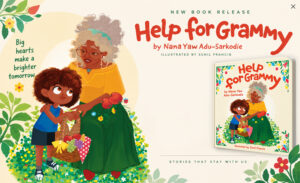
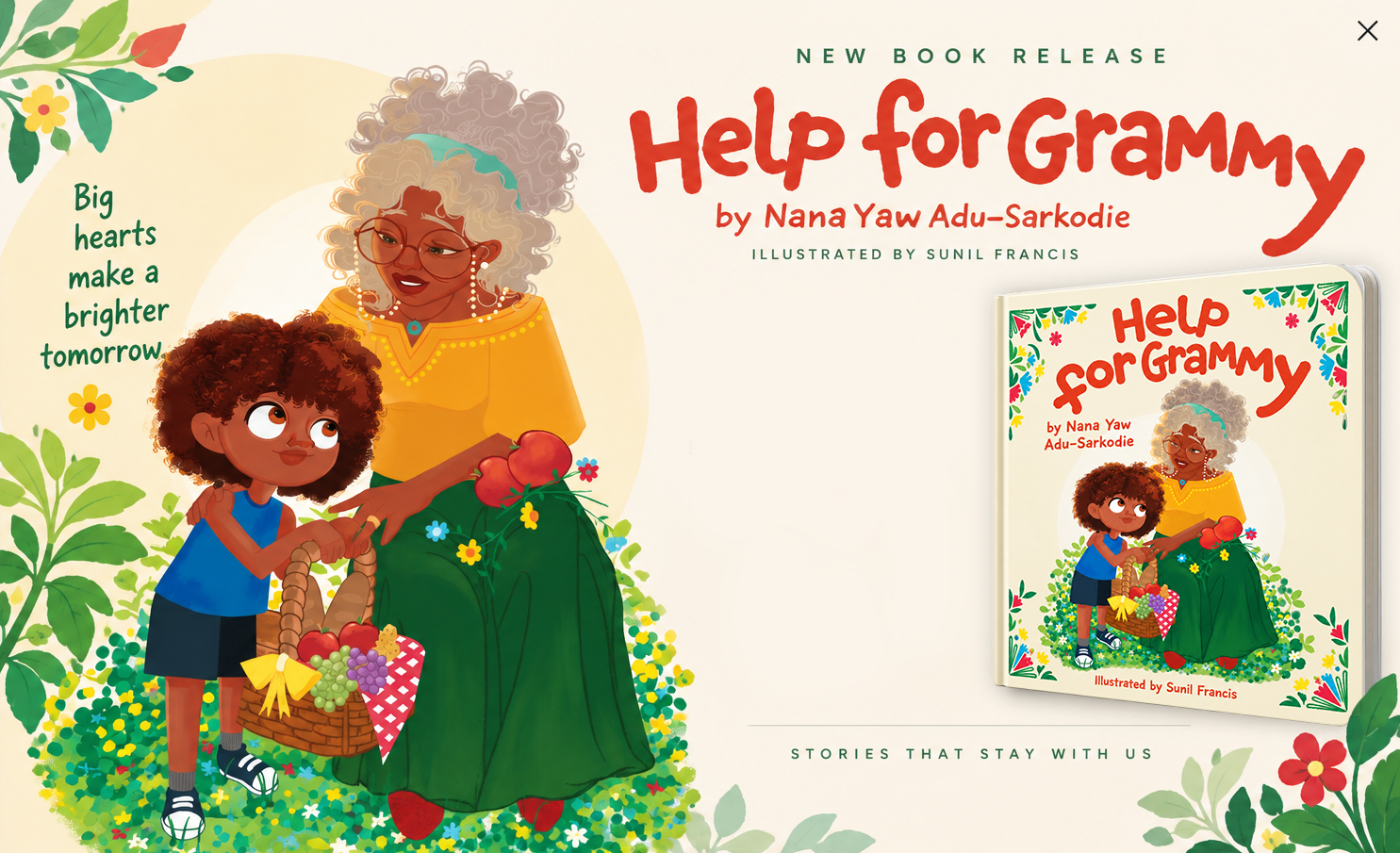
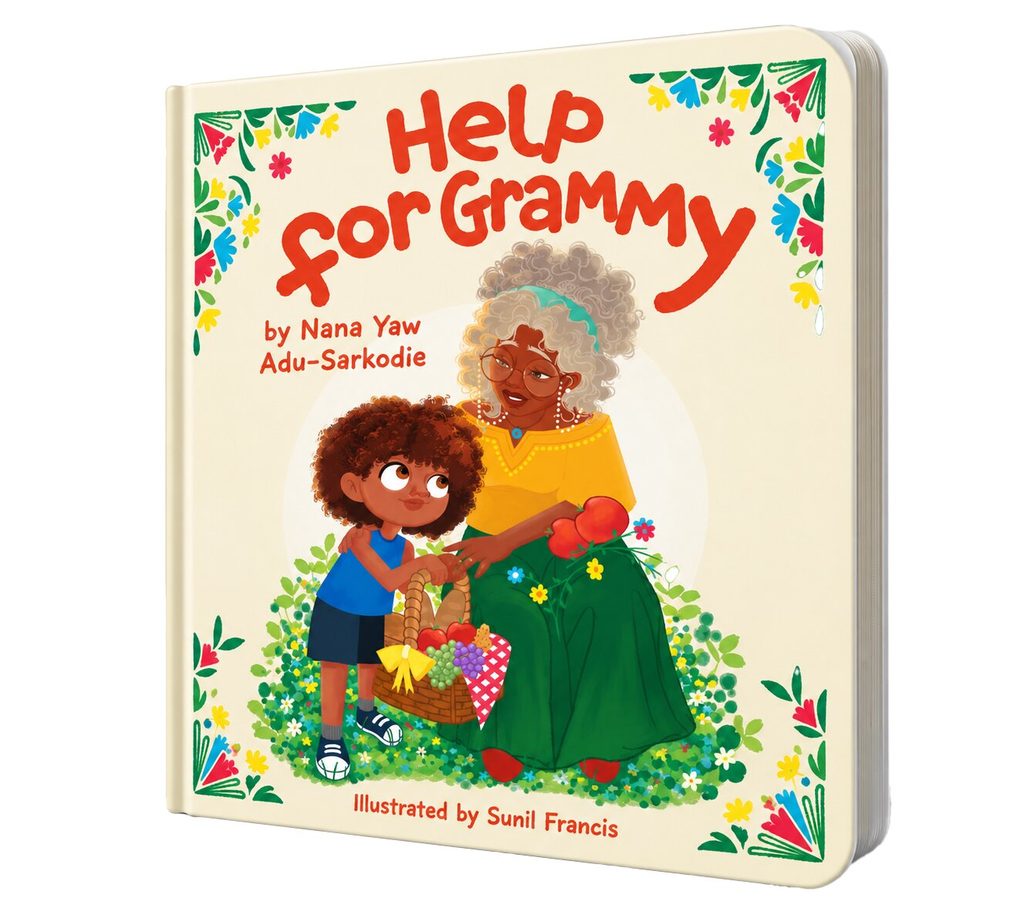
His new children’s book, “Help for Grammy,” released today (Sept. 21) through Karen Hunter Publishing, helps children ages five to 12 understand what can happen when a grandparent or another loved one begins experiencing dementia.
For Dr. Yaw, a physician specializing in geriatrics and family medicine, the book grew from more than 15 years of caring for older adults and watching families adjust alongside them.
“Children notice,” he told TheHub.news. “The adults may understand that something is changing. The child may simply know that Grammy isn’t acting like Grammy anymore.”
That observation became impossible for him to ignore.


Dr. Yaw shared that many of the adults he encounters are part of what is often called the “sandwich generation,” raising their own children while simultaneously caring for aging parents. While adults try to understand a parent’s changing needs, their children watch the same transformation from a very different vantage point.
They notice when Grandma repeats herself. They notice when she forgets a name and they notice when routines change. One conversation with a caregiver stayed with him. Her mother had begun forgetting her grandchildren’s names, leaving the children to process a change they did not understand.
“I remember thinking, How many other children are going through something like this? And where are the words to help them understand it?” Dr. Yaw shared.
That question became the seed for “Help for Grammy.”
The need is especially meaningful for Black families. Older Black Americans are about twice as likely as older white Americans to have Alzheimer’s disease or another dementia, according to the Alzheimer’s Association. More than 1 in 5 Black Americans age 70 and older is living with Alzheimer’s.
Yet children’s stories about dementia that place Black families at the center remain difficult to find.

Dr. Yaw wanted his book to make a complicated subject understandable without turning childhood into a medical lesson or scaring young readers.
“The goal of the book isn’t to frighten children or turn them into caregivers. It’s to give them language for what they are seeing, space for their questions, and ways to remain connected to someone they love.”
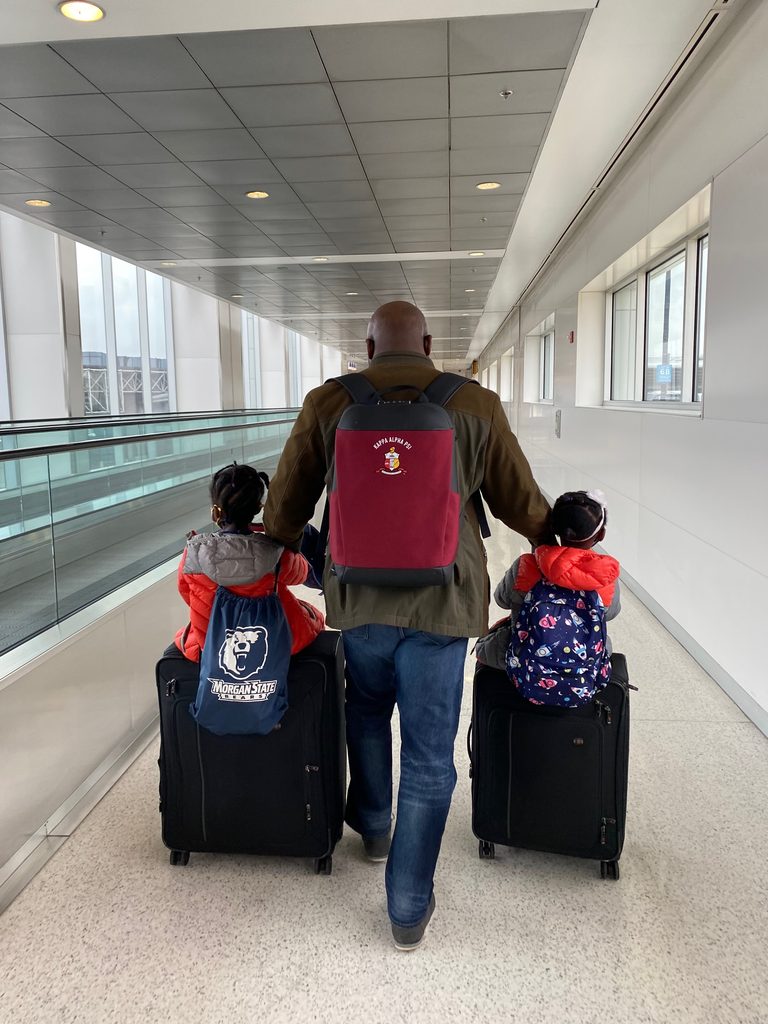
His own daughters helped shape his thinking about how much children can handle. They were seven and nine when he began the project and had already grown accustomed to asking their physician father questions about subjects adults sometimes struggle to explain. Growing up during the COVID-19 pandemic meant they heard conversations about illness, death and nursing homes fairly often.
“They wanted to understand what they were seeing and hearing,” he said.
So he began explaining complicated ideas through things they already knew. A brain, for example, could be compared to a computer or tablet that sometimes runs out of memory or glitches but something not working the way it once did does not mean it has lost its value.
“Children are capable of understanding complicated things when we explain them in ways that make sense to them. We don’t have to choose between protecting children and telling them the truth. We can tell the truth in a way they can understand.”
In “Help for Grammy”, a young boy named Jaylen begins recognizing changes in his grandmother. At one point, he remembers that she even forgot to pick him up from school. Those moments matter because dementia does not only affect the person who receives a diagnosis…Its changes ripple throughout a household.
“Aging and dementia can change that relationship,” Dr. Yaw continued. “Sometimes the person who once taught us everything begins needing help themselves. I want children to understand that change doesn’t mean the relationship has to disappear.”
There can still be music, photographs, jokes, stories, hugs and time spent simply sitting together.
“Sometimes connection looks different, but it is still connection,” he said, noting that his own daughters have grown up knowing all of their grandparents. He had less time with his paternal grandmother, who became one of the most important people in his childhood. She was, he recalled, his caregiver, friend, disciplinarian, nurse and an early inspiration for his decision to become a doctor. He hopes “Help for Grammy” encourages children to value those intergenerational relationships before a crisis occurs.
“Grandparents have stories. They have family history. They have lessons, traditions, humor, and experiences that can be passed down,” he explained.
“Children are children. They are not little adults,” he said.
A child may notice extra locks appearing on the door, wonder why Grammy can no longer help with homework or see a parent constantly checking on an older relative. Dr. Yaw believes adults should answer those questions instead of brushing them aside with a simple explanation that a loved one is “not feeling well.”
Children need age-appropriate information, he said, along with permission to talk about their feelings.
“Giving a child a way to help is different from giving them responsibility for someone’s care. A child can be helpful without becoming the caregiver.”
Dr. Yaw and publisher Karen Hunter share a long history.

In 2017, he appeared on “The Karen Hunter” Show to discuss dementia and restaurateur and model B. Smith’s experience with Alzheimer’s disease from a clinical perspective. During the conversation, Hunter asked what else he was working on. Dr. Yaw proudly showed her “In the City,” a children’s book he had self-published for his then-toddler daughter to share his love of New Orleans.
Hunter took one look at it.
“I mentioned it was self-published and Karen said, ‘I can tell!’ on air,” he recalled.
He laughed, admitting that the comment stung a little… “I thought, ‘Oh, I like her!’”
Years later, when Hunter saw potential in “Help for Grammy” and wanted Karen Hunter Publishing to shepherd the project, Dr. Yaw said the experience felt like it had come full circle.
The book’s illustrator also has a strong connection to the book’s subject matter.
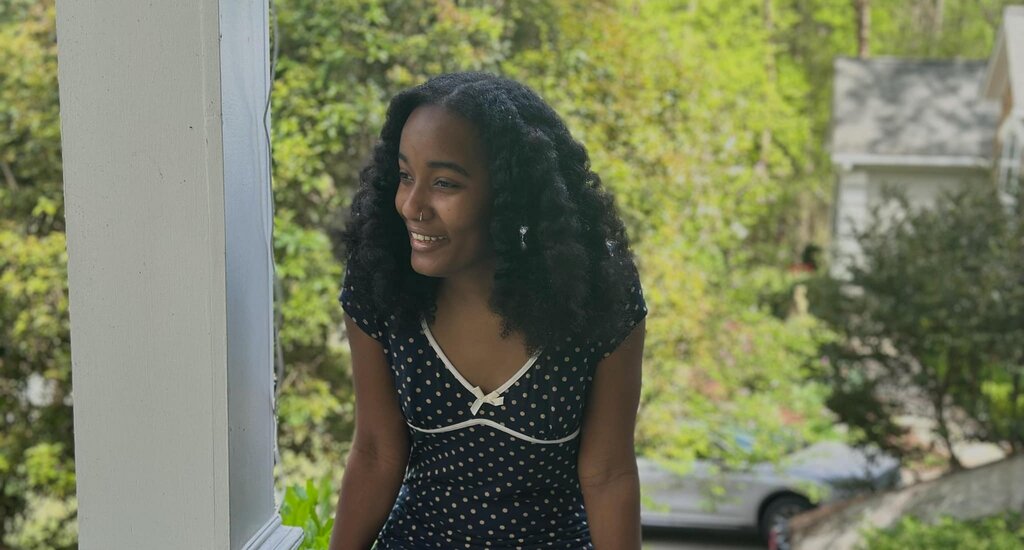
The story became deeply personal for Francis as well, in ways she could not have anticipated when she began illustrating it.
Francis, 24, was born in London to Jamaican parents and has lived in the United States for more than a decade. Last year, her mother took an Ancestry DNA test and was shocked to learn that the man she had believed was her biological father—was not. After eventually locating her biological father, Francis’ mother learned that his mother, Francis’ great-grandmother, had recently died following a lengthy battle with dementia.
“Before the book was finished, I found myself, and my family around me, affected by the very thing this book is opening our eyes to,” said Francis. “My great-grandmother had been affected by dementia. Before I could even meet her in person for the first time, she’d passed away. I also lost my grandmother figure on my father’s side several months ago after her years-long battle with dementia. Fortunately, I did have the opportunity to meet her years ago in Jamaica. She was a beautiful soul ”
Illustrating the book became an emotional journey for Francis, from developing the characters on the page to recognizing parts of her own newly discovered family experience in its message.
“What I learned from these experiences was not to look back and feel sad, but to remember the good times and enjoy what time you have together,” she said, adding that the experiences also changed how she thought about the legacy older relatives leave behind, even when a family does not get as much time together as it hoped.
“We are blessed to have these people in our lives, and even after, their legacy and memories still leave that same spark in your life. This book comes out on World Alzheimer’s Day, a day special to many around the world, and a day we can spread awareness of it and teach the youth about this and help them to understand that they are not alone.”

Dr. Yaw hopes the finished book does more than help families explain dementia— that it opens up conversations about aging long before memory loss or another medical crisis forces those discussions.
“We often pay more attention to developmental milestones for children but often don’t also address healthy vs. unhealthy aging as we get older,” he continued. “Aging is a journey, too.”
And even when that journey becomes difficult, he wants children to know there’s still room for joy.
“While some parts of aging, specifically dementia, can be difficult, there are still opportunities for connection, learning, humor, and love,” Dr. Yaw concluded. “I hope this book inspires families to find those bright spots that come with aging.”
“Help for Grammy” is available to order right now from KarenHunterPublishing.com.
ICYMI: A few other Karen Hunter Publishing titles: