







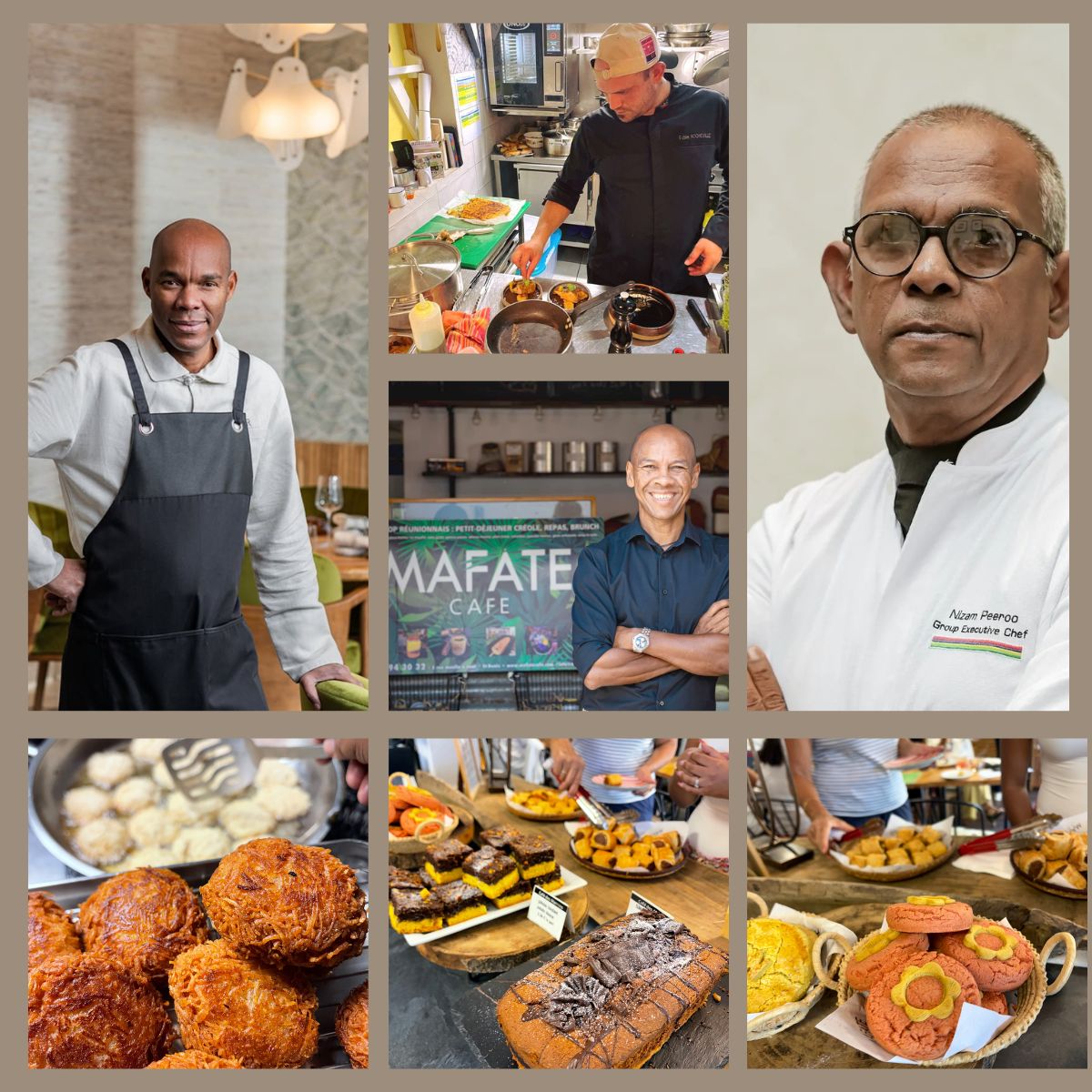
Article by media partner Cuisine Noir, the country’s first Black culinary lifestyle outlet since 2009 dedicated to connecting the African diaspora through food, drink and travel.
The Sommet & Festival International des Chefs Créoles in Saint-Denis, Réunion, is set to take place next week from May 22 – 24, marking the island’s inaugural Creole food festival that joins global food narratives about Creole cuisine, culture and history.
In December, Cuisine Noir spoke with Jean-Charles Bertrand, the festival’s founder. Organized by the International Institute of Creole Gastronomy, which Bertrand leads, the Institute views Creole as an identity rooted in mixed cultures, originating from Africa and influenced by Indigenous, Asian, and European elements.
“The process happened quite naturally, with chefs coming together around a theme like Creole cuisine,” Bertrand explains. “It’s universal; it brings people together across oceans, whether from the Caribbean, the Indian Ocean, or elsewhere. We almost all share the same history, the same experiences, the same struggles. Creole cuisine is a moment that brings us together—that’s what makes the event a success.”
This reflects the complex history of societies shaped by colonization and the Transatlantic Slave Trade. Here are three talented, Creole-rooted chefs participating in the upcoming culinary event and how each is keeping the traditions of Creole cuisine
Creole Cooking as a Living Memory – Chef Marcel Ravin
Marcel Ravin was born on the French Caribbean island of Martinique. “I grew up in Le Diamant, surrounded by my grandmother Yvanesse’s simmering pots, where everything cooked slowly, and where I was learning without even realizing it.”
He says that on the island, cooking is a living memory, passed down more than taught. “Creole cuisine is a cuisine of survival that became a cuisine of transmission,” he says. “It was born out of constraint, forced migrations and silent resistance. Today, it is a powerful cultural expression, and it is time for the whole world to recognize it.”
Chef Ravin characterizes his cuisine as a “cuisine of culture,” reflecting a fusion of identities developed through his dual education. “My family’s deeply rooted Creole traditions are one, and then classical French cuisine is the other, he says.
“I left Martinique at 17 after earning my Certificat d’Aptitude Professionnelle (Certificate of Professional Aptitude or CAP) to continue my training in mainland France. My journey began in Alsace, then continued in Michelin-starred establishments from Brussels to Lyon, before bringing me to Monaco in 2005. It is a constant dialogue between two heritages, and that dialogue has become my signature.”
By Stephanie Teasley


