






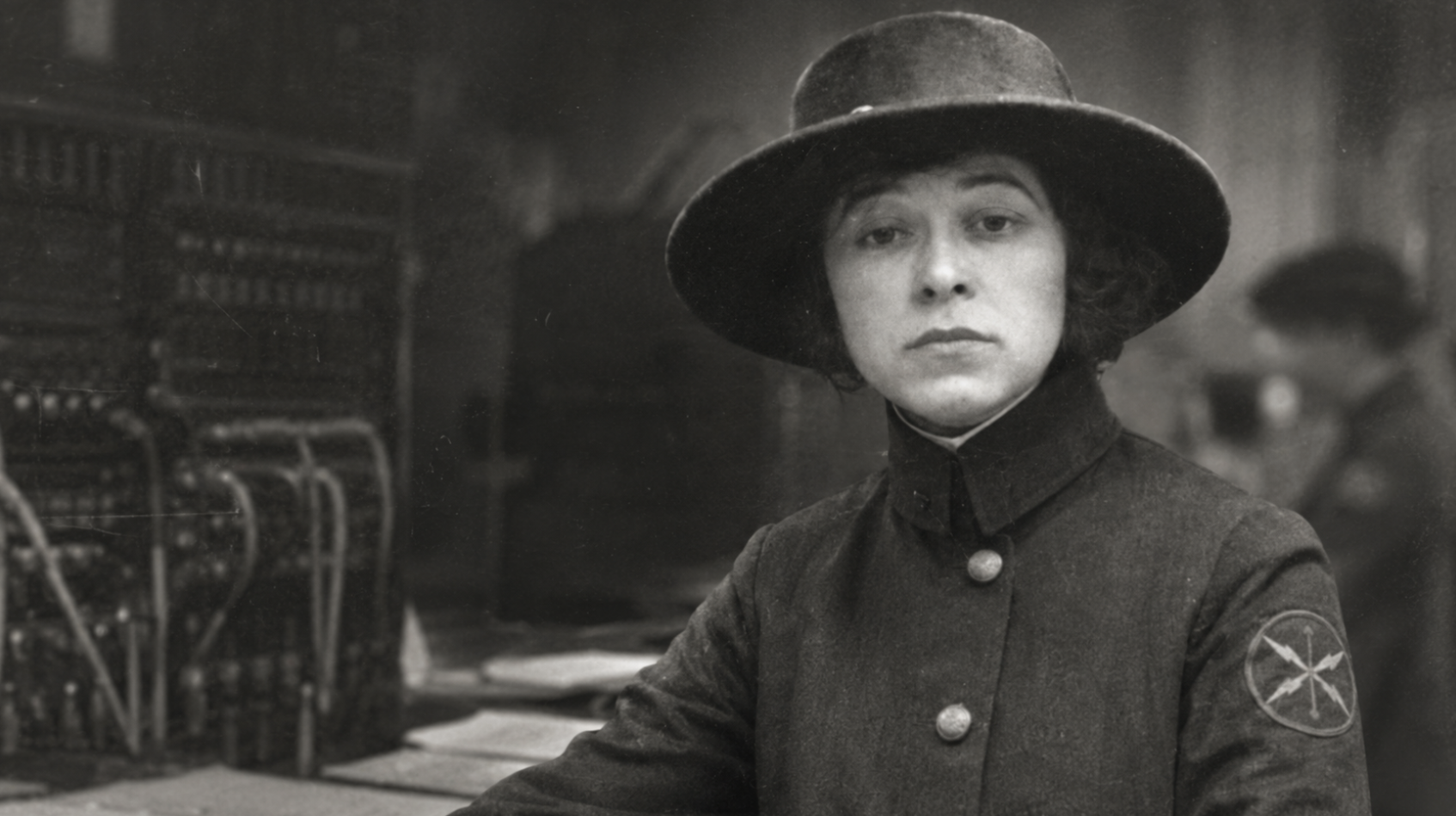
A ceremony held late last week honored Renee Messelin, a World War I veteran who was the first Black woman to join the U.S. military.
Messelin was honored at the Lincoln National Cemetery memorial in Chicago on Thursday. Friends and supporters were present at the ceremony along with several leaders, including President of AT&T Illinois Eileen Mitchell, Capt. Diane Boettcher, Executive Director of the Center for Women Veterans Jacquie Hayes-Byrd as well as President & CEO of the Doughboy Foundation Clair Sassin.
To honor her, a cenotaph was placed at the Lincoln National Cemetery. The monument will serve as a symbol of her sacrifices and her groundbreaking achievements. Messelin herself was cremated in a Tampa-based funeral home after passing away in 1977. Her ashes were spread into the bay.
“Renee was a pioneer who served as a supervisor in the very first unit of the US Army Signal Corps Telephone Operators, sailing overseas on March 6, 1918. She was a soldier, a leader, and later, a talented actress,” said leaders of the Hello Girls Military Honors and Remembrance Project per a Facebook post. “Though she rests elsewhere, her legacy is permanently honored with an ‘In Memory Of’ marker.”
For decades, Messelin’s life remained a mystery. In 2024, the Doughboy Foundation unveiled her heritage as a Black woman, as Messelin was forced to hide her race due to the Army’s discriminatory policies against Black women.
Her father, Mack Caldwell, was the Grand Secretary of the United Brotherhood of Railway Porters, a union for the Black railway workers. Meanwhile, her mother, Mamie Caldwell Rich, was a benefactor of the Phyllis Wheatley Home nonprofit, which provided support for Black women leaving the South.
She joined the army in 1917 as one of the 7,600 women to respond to a press release recruiting women for 100 positions in the U.S. military. As members of the “Hello Girls” group, the women worked in communications, operating switchboards in France. They responded to military commands 24 hours a day, even through language barriers, to ensure smooth communication and eventually sent 26 million messages throughout the war.
The Doughboy Foundation launched an initiative to locate the women’s resting places. While the final resting places of 50 women were found within a month, Messelin was harder to track down as little information was provided about her family.
A 1916 article announcing her divorce, however, established that “Messelin” was her married name, while a 1920 census confirmed she was born in France.
Further research traced her down to Chicago, where she lived with her husband, Robert Arthur, until 1950. Following her career in the army as a leader, she worked as an actor and in radio. The couple then moved to Florida, where Messelin passed away in 1977.
Through their work, the Doughboy Foundation also led a years-long campaign to formally honor the Hello Girls. In 2024, they achieved success with the passage of the Hello Girls Congressional Gold Medal Act, awarding the group of more than 220 women with a Congressional Gold Medal.