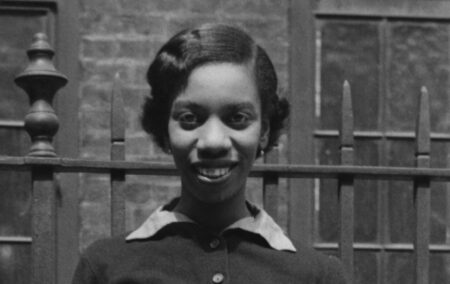




On this day in 1926, artist Betye Irene Brown was born in Los Angeles. Known professionally as Betye Saar, she became one of the most influential American artists of her generation.
Saar grew up collecting small objects, repairing things and paying close attention to the materials around her. After studying at Pasadena City College, she earned a bachelor’s degree in design from UCLA in 1947. A printmaking class later changed the direction of her career, giving her what she called a “segue from design into fine arts.”

She became a major figure in the Black Arts Movement of the 1970s. Her work confronted stereotypes about race, gender and Black life, often using objects that American culture had treated as disposable. Saar turned advertisements, toys, photographs and other found materials into direct statements about power and dignity.
Her childhood in Los Angeles also shaped her artistic eye. Saar watched Simon Rodia build the Watts Towers with broken dishes, shells, rusty tools and other everyday materials. She later recalled being “fascinated” by how those objects were pressed into cement. A 1967 exhibition by found-object artist Joseph Cornell further encouraged her move into assemblage.
Her best-known work, “The Liberation of Aunt Jemima,” was created in 1972. Saar transformed the racist mammy figure into a symbol of resistance by placing a broom in one hand and a rifle in the other.
“I wanted to empower her,” Saar said. “I wanted to make her a warrior. I wanted people to know that Black people wouldn’t be enslaved by that.”
Saar’s art also drew from family history, spirituality and memory. After her great-aunt died in 1974, she incorporated letters, photographs, lockets, flowers and handkerchiefs into personal assemblages, later creating room-sized installations and taught at UCLA and the Otis Art Institute.
Saar also helped create space for Black women artists, challenged exclusion within the art world and remained outspoken about the use of racial stereotypes.
In 2025, Saar announced the Betye Saar Legacy Group, formed with curators and her daughters to support scholarship and access to her archive.
Saar died at her Los Angeles home on July 26, 2026, four days before her 100th birthday.