





Article by media partner Cuisine Noir, the country’s first Black culinary lifestyle outlet since 2009 dedicated to connecting the African diaspora through food, drink and travel.
When people picture a Euro summer, they usually think Ibiza beach clubs, French wine vineyards, and Positano’s postcard-worthy coastlines. For the Black diaspora, the season starts somewhere else: Afro Nation Portugal.
Set to return in the Algarve from July 3–5, this year’s sold-out festival will welcome nearly 40,000 attendees each day. What began in 2019 as a gathering rooted in diasporic music, fashion, dance, and unapologetic Black joy has since grown into a global cultural phenomenon, drawing travelers from more than 180 countries. Furthermore, this year’s lineup brings together some of the biggest names in music, including Burna Boy, Wizkid, Asake, Tyla, Uncle Waffles, Gunna and Kehlani.
But Afro Nation Portugal doesn’t stop at the stage. The experience stretches well beyond the performances, with food vendors that hold their own against the headliners. Afro Nation Portugal’s culinary offerings serve up flavors, traditions, and comfort foods that connect Black communities across the diaspora. And between sets, festivalgoers trade the usual letdown of festival fare—think questionable hot dogs and stale nachos—for dishes layered with generations of technique, spice and cultural pride.
That energy runs throughout Praia da Rocha, where Black food culture takes center stage across the festival grounds. From aromatic Nigerian jollof rice to inventive takes on Jamaican classics and more, the culinary scene turns every break between sets into a destination in its own right.
Below are Black-owned food vendors worth lining up for throughout Afro Nation Portugal’s three-day takeover.
Afro Nation Portugal Food Guide: What to Eat
Abarka
Abarka operates as a cooperative under the nonprofit Dunia Kato, which supports migrants and systemically excluded people. The collective launched in 2020 with a focus on food as both livelihood and cultural expression.
“We chose this legal structure because it best reflects our vision of the social and solidarity economy, a model that places people at the center rather than capital,” a member of the cooperative told me. “It represents an alternative to the capitalist system, which is focused on unlimited growth in production and consumption regardless of its social and environmental consequences.”
Last year at the festival, Abarka drew attention with their menu that spotlighted dishes like akara, black-eyed pea fritters; alloco, fried sweet plantains; and thiébou yapp, a Senegalese one-pot dish built around tender, stewed meat and aromatic grains.
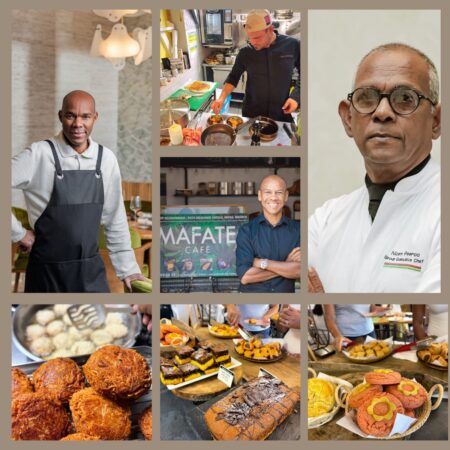
This year, the collective is excited to debut their chickenloco featuring marinated fried chicken served with a bright mango sauce. “We would also like to highlight our mafé, a traditional peanut stew made with vegetables and beef (also available in a vegan version),” says the member. “It can be served with a variety of sides, such as white rice, millet couscous, fufu, and many others. This dish is particularly meaningful to us because it reflects the traditional culinary heritage that we aim to represent and celebrate.”
To learn more about Abarka, visit them on Instagram and on their website.
By: Ashia Aubourg