



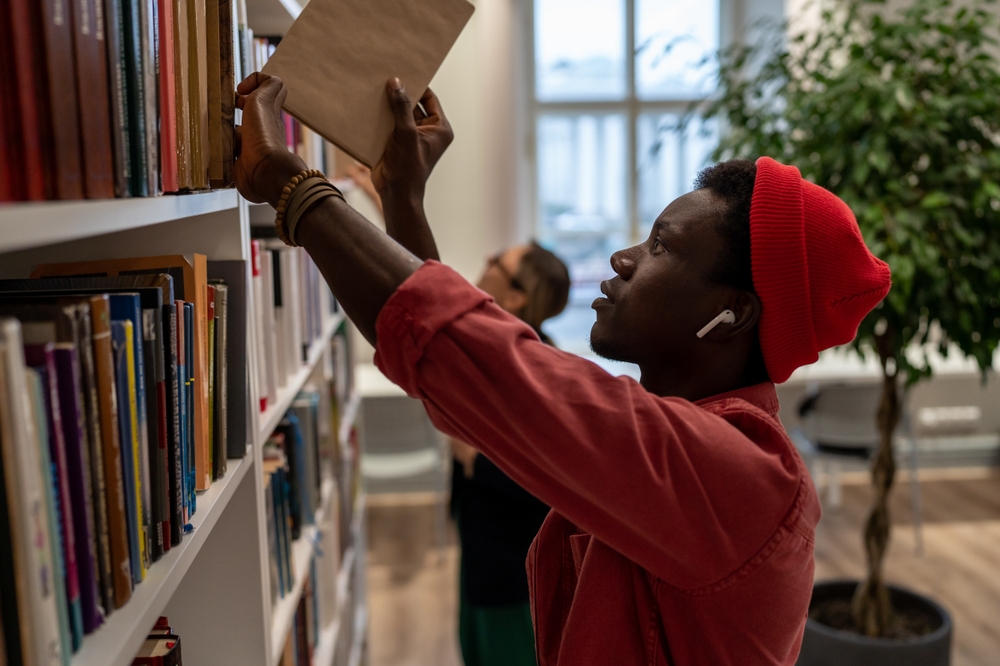
The National Association of Black Bookstores launched a new directory this week that identifies all the Black-owned bookstores in the U.S.
First made available last week, the directory features the locations and information for approximately 306 Black-owned bookstores in the U.S. Any additional stores that have opened in places such as Europe and the Caribbean have also been included. The directory allows users to sort the list by city and state.
The site also filters through the 306 bookstores by type, identifying which stores have physical locations and which are strictly online order-based. The directory further spotlights which businesses are pop-up vendors and which are mobile bookstores. Per the press release published by the nonprofit, the directory is intended for readers, educators, publishers, authors, policymakers and industry partners.
It was published alongside a new report detailing the growth and persistent issues Black-owned bookstores face.
Per the report, titled “The State of the Black Bookstore Report,” 90% of the Black-owned bookstores that are currently in operation make less than $250,000 annually. Approximately 36% do not have a permanent building to work out of, and there are currently no Black-owned bookstores located in 14 states.
“Black bookstores have always done more with less. We have survived by serving our people, protecting our stories, and holding space when few others would,” said Yvonne Blake, a member of the National Association of Black Bookstores and owner of one of the longest-operating Black-owned bookstores. “This report tells the truth plainly. It honors the work that came before us while making clear what must change if these bookstores are going to be here for the next generation.”
In 1834, the first Black-owned bookstore in the U.S. opened in New York City, owned by David Ruggles. Born in 1810, Ruggles was an abolitionist as well as a founder and writer of the Mirror of Liberty newspaper. He is also known as one of the first organizers of what would become the Underground Railroad.
With the bookstore, Ruggles helped spread information by abolitionist and feminist writers. Eventually, it expanded to include a reading room and lending library. The reading room provided refuge for those who were escaping enslavement. Frederick Douglass was amongst the people he assisted.
Since then, despite the hardships, the number of Black-owned bookstores continues to grow exponentially. In recent years, the number has grown by more than five times, expanding from 54 bookstores to 306 in the past 10 years alone.