






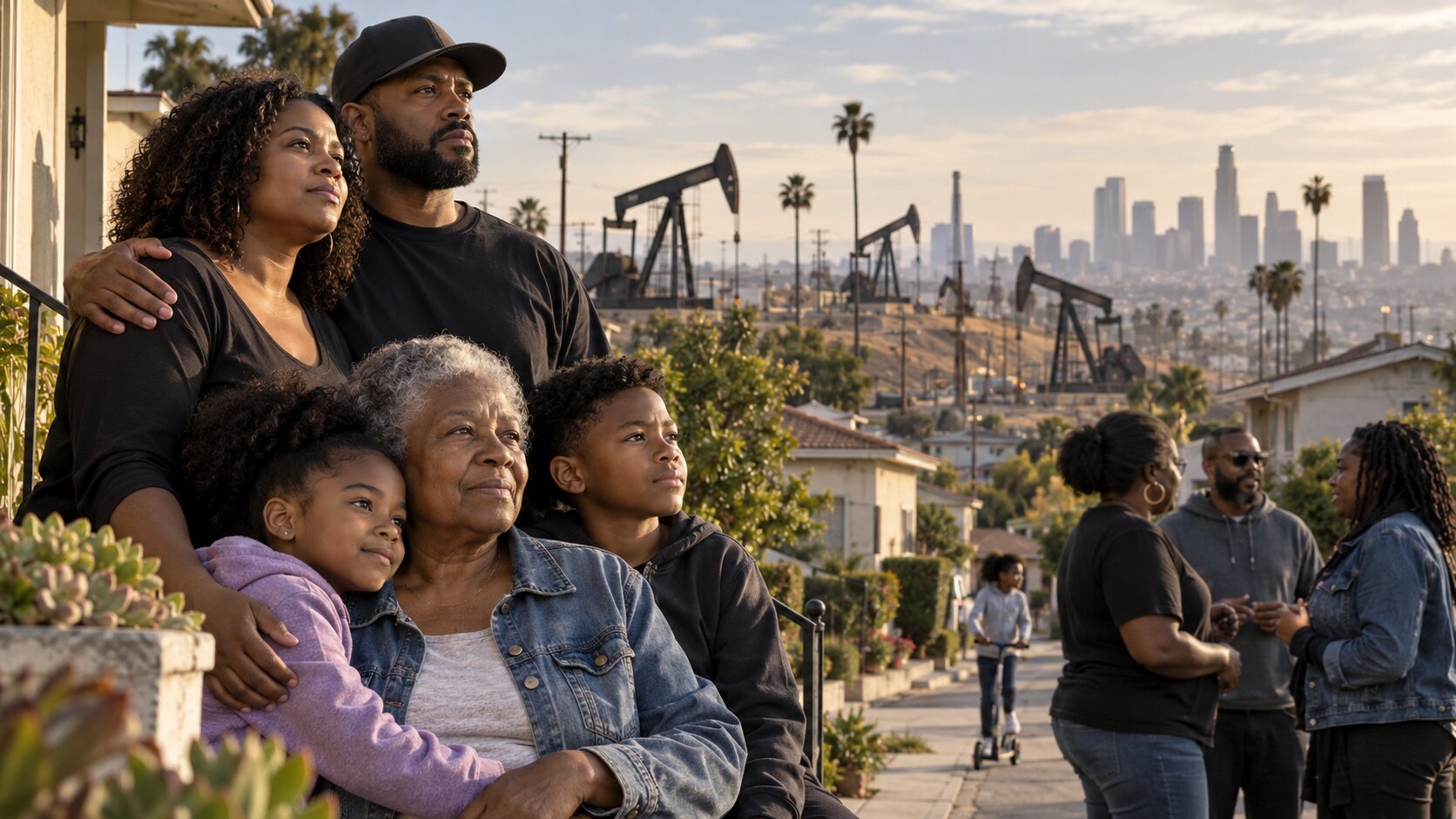
New California legislation is on track to help families affected by industrial toxins.
Introduced by Assemblymember Isaac G. Bryan, the bill, known as AB 1661, addresses any waste within the boundaries of the Baldwin Hills Conservancy. Through the law, the Department of Conservation would dedicate $5 million to the Equitable Community Repair and Reinvestment Account to begin a program that distributes funds to those impacted by wells from the Inglewood Oil Field.
The program will provide cash assistance to all residents living about two and a half miles from the low-production wells. They will receive reparations if they meet the residency and health-impact requirement, which requires that at least one family member has respiratory or reproductive health issues.
The application process will be standard, and funds will be distributed amongst 1,000 households. If the number of applicants exceeds 1,000 households, the county will have to choose recipients through a lottery.
The bill is moving through the approval process. It recently passed the second chamber, was enrolled, and was presented to the governor. Governor Gavin Newsom is expected to sign it into law by October.
“The company has essentially just been extracting from the community with no investments in the community, no care in the community and what feels like no regard at times for the broader community,” Bryan said in conversation with Capital B. “The community [is] due this repair, and it’s been long overdue.”
Bryan has already had legislation approved that requires the Inglewood Oil Field to close by 2030. A penalty is also set to be enacted for low-producing wells that leak gases such as methane.
Often located within Black communities, these oil fields are linked to increased rates of cancer, liver damage, immunodeficiency, and neurological damage. A 2017 study led by the Clean Air Task Force and the NAACP found that Black communities were 75% more likely to live near an oil or natural gas production site. These sites are located within a half-mile of at least 1 million Black Americans.
As a result, Black Americans are 1.5 times more likely to be diagnosed with asthma. They are also three times more likely to pass away from an asthma-related issue and five times more likely to visit an emergency department due to the illness. Black Americans are also more likely to pass away from cancers such as lung cancer. Overall, one in six Black men and one in seven Black women living in the U.S. pass away from developing some type of cancer.
“The effects of oil and gas pollution are disproportionately afflicting African Americans, particularly cancer and respiratory issues, and the trend is only increasing,” said Dr. Doris Browne, NMA President, in their report. “Our membership is seeing far too many patients in communities of color suffering from these diseases. It is our goal to fight to reverse this dangerous trend.”